- December 20, 2025
Four dancers explored the lesser-known facets of Tamil literature at Natya Darshan festival
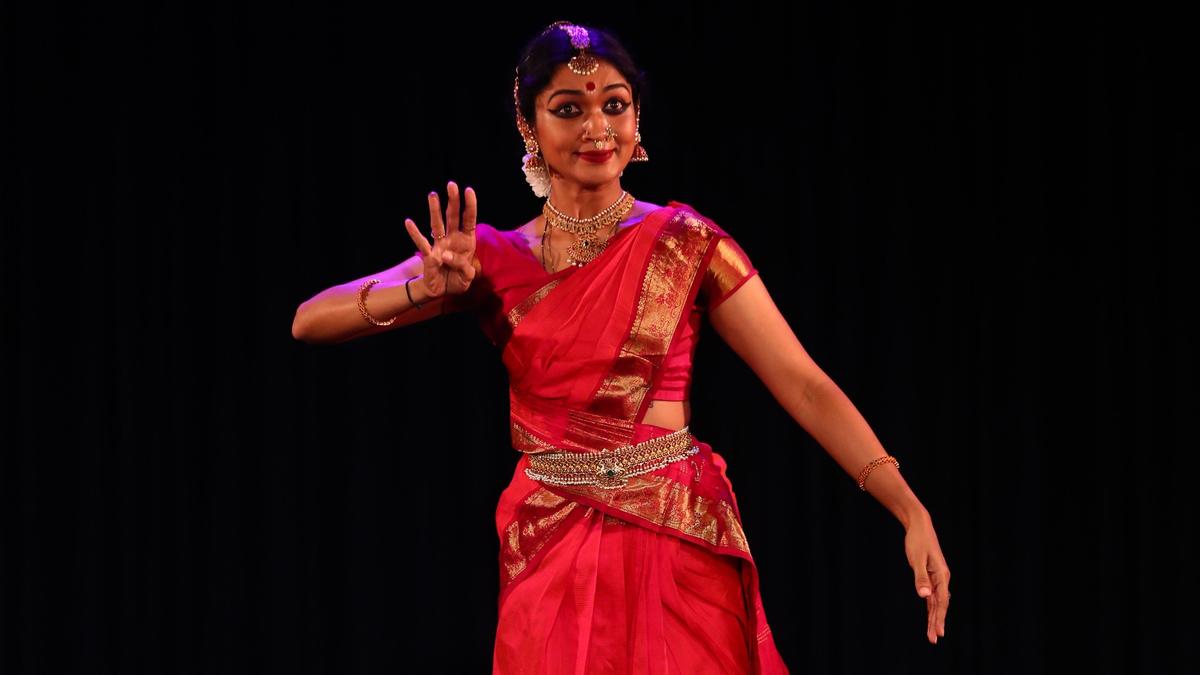
‘Murugayil Tri-Yatri’, Narthaki Nataraj’s curation for Kartik Fine Arts’ Natya Darshan 2025, saw young dancers engaging with lesser-known facets of Tamil Literature. It featured themed segments of Sangam literature and bhakti poetry (Thiruvisaippa, Nondi Chindu and Tirupugazh) and the works of Bharati. It was a laudable initiative, even if a bit over-stretched.
Karuna Sagari.
| Photo Credit:
SRINATH M
‘Kaapiya Kaavyam’ presented epic poetry, a verse from Sangam literature and the epic Silappathigaram in a nutshell.
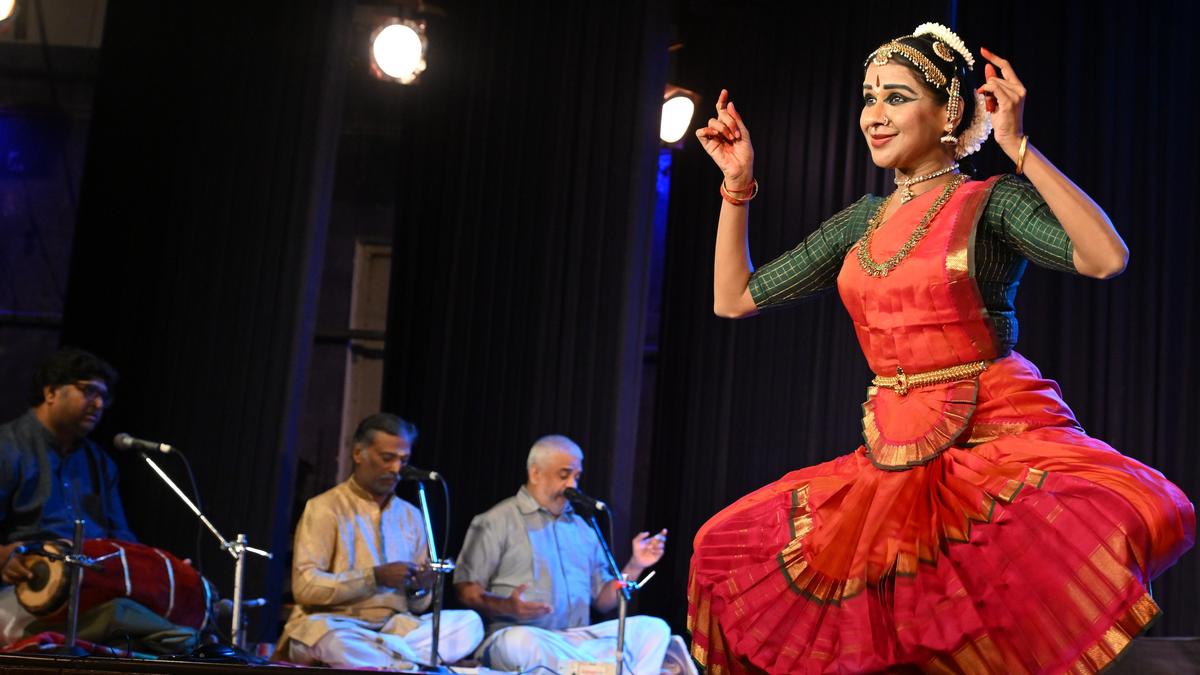
Karuna Sagari impressed in ‘Mullai veinnunai thondra’, the Sangam-Agam verse by Kurungudi Maruthanar. The evocative visuals of the mullai forest landscape, rain and a woman waiting anxiously for her man came alive. He happens to be racing there when he hears the bees. He stops to listen and instructs his charioteer to tread carefully to not disturb the bees in love. The last bit when the chariot slows to a crawl was poetic. The music was stunning as well (Karaharapriya – Sivasri Skandaprasad). The sakhi part requireed more clarity.
Archana Narayanamurthy.
| Photo Credit:
SRINATH M
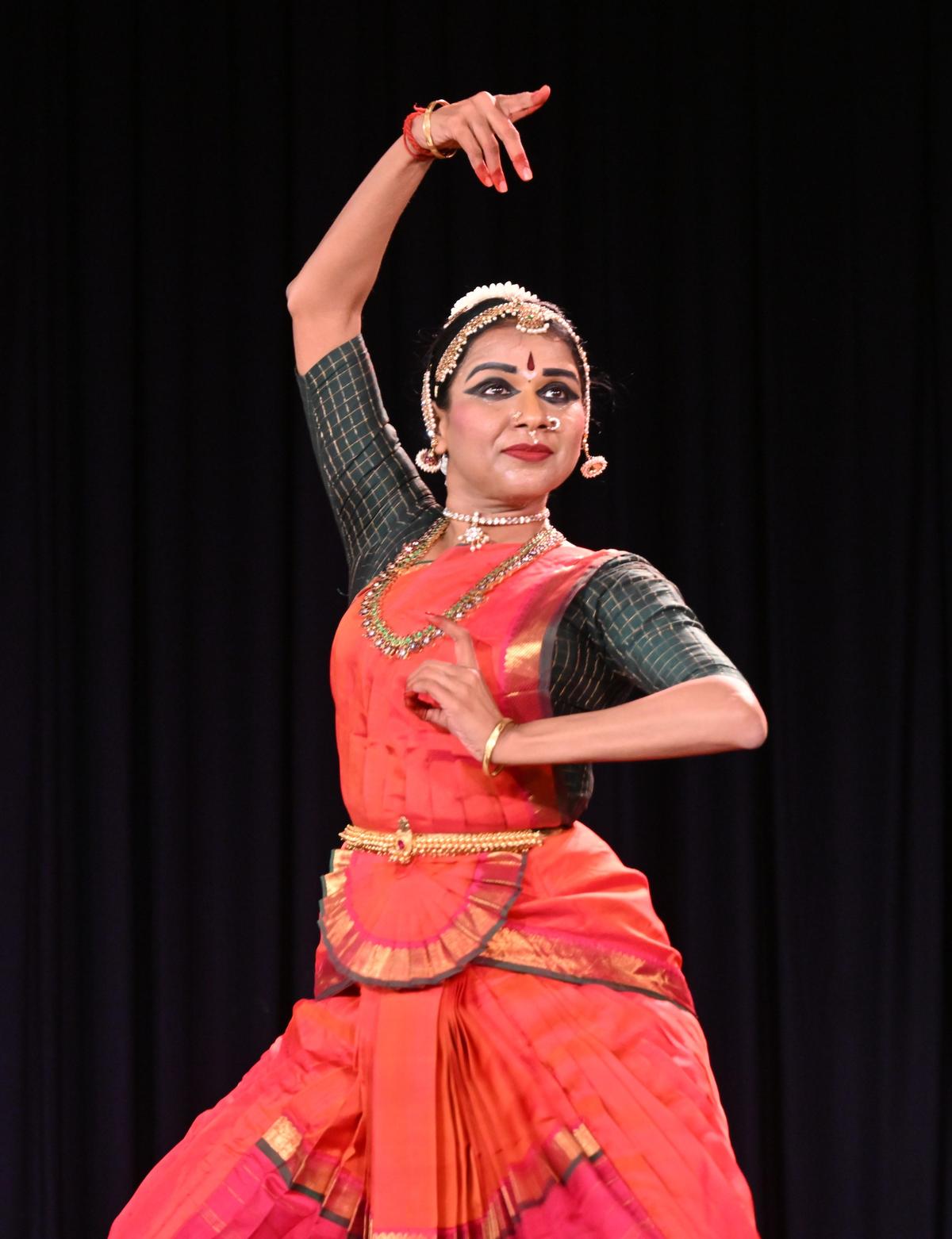
With her vidwat, Archana Narayanamurthy was able to condense Jain monk Ilango Adigal’s epic Silappathigaram into a 17-minute-presentation. This young researcher’s neat dancing and attention to detail delivered the highlights of the Puhar, Madurai and Vanchi kandams — the story of Kovalan and Kannaki’s marriage, Madhavi’s Arangetra ‘Kaathai’, which is till today considered the earliest documentation of Koothu or dance, Kovalan’s flirtation with Madhavi, the break-up and the subsequent anklet episode when Kovalan is executed wrongly and Kannaki takes revenge by burning Madurai.
Aided by Pandanallur Pandian (nattuvangam and visualisation), rhythm leads by Mayavaram Viswanathan and emotional music by Gomati Nayakan, Silappathigaram struck all the right chords.
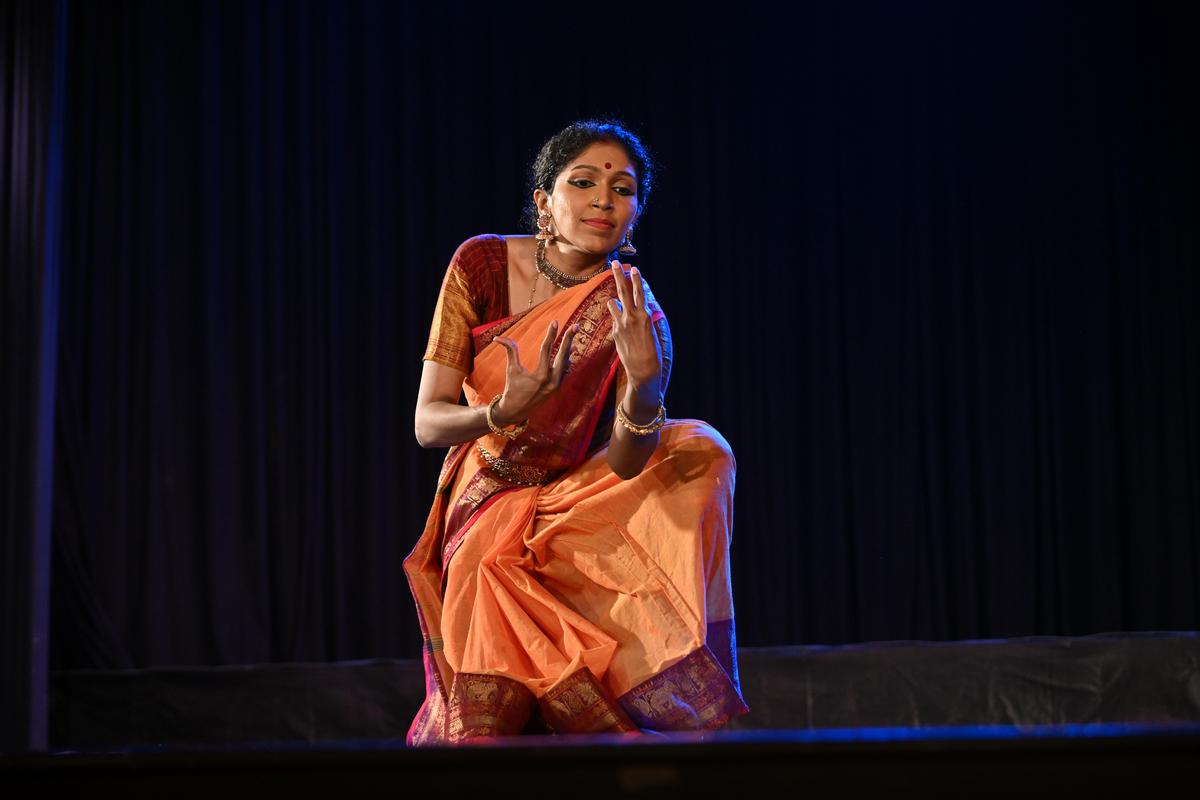
Karuna Sagari.
| Photo Credit:
SRINATH M
Scholar Dr. Sudha Seshayyan clarified that though specific shades of love were identified with each of the five landscapes, there was no restriction on love and other emotions being explored in any landscape. She explained the nuances of the ‘paravai’ – anything with wings, in the verse in question, ‘Mullai vennunai…’ it referred to the bees. And by extension, the sensitivity of Sangam poetry and the scope for dancers to express the micro-sentiments expressed in between the lines.
Thalaimuraivazhi Payanam
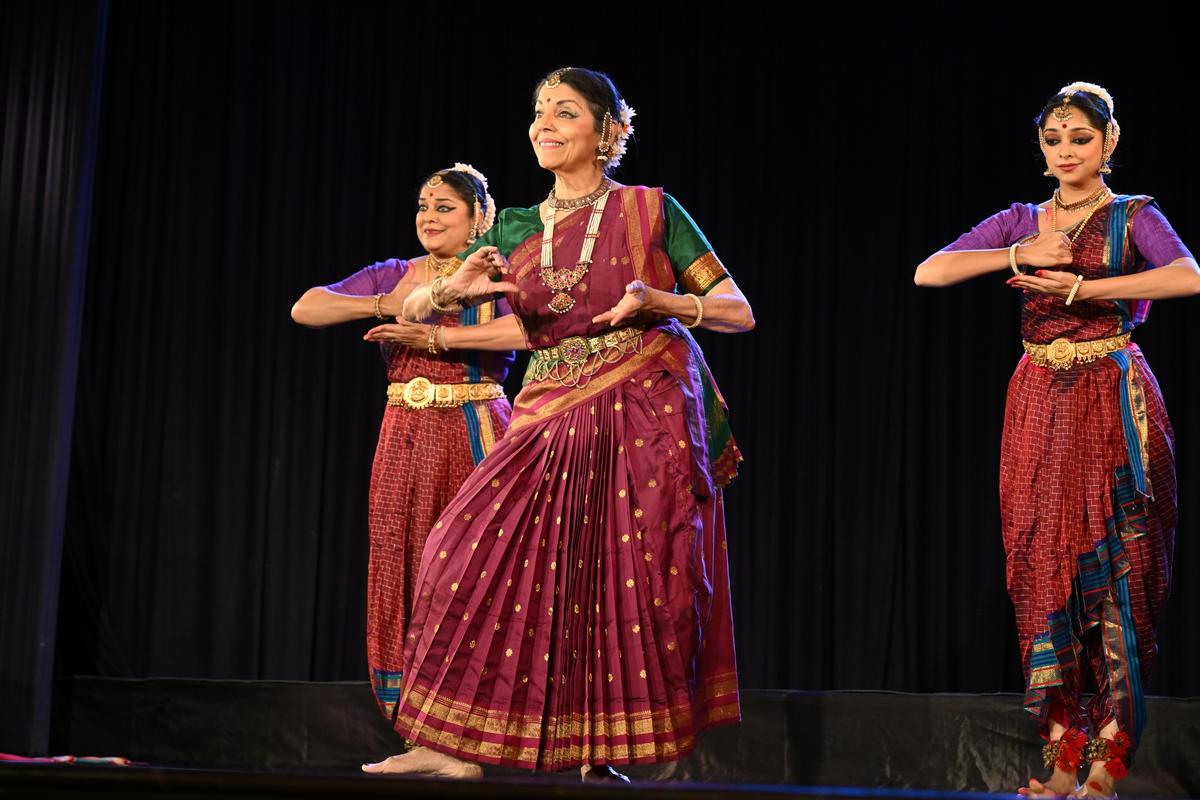
Sucheta Chapekar.
| Photo Credit:
SRINATH M
Seeing her agility and energy, it is difficult to believe Sucheta Chapekar (disciple of Gurus Parvathi Kumar and K.P.Kittappa Pillai) is an octogenarian. She was part of a three-generation dance presentation along with her daughter Arundathi Patwardhan and granddaughter Sagarika. They presented some old pieces — ‘Mangala pade’ written by King Shahaji Raje Bhosale in the 17th Century and choreographed by Guru Kittappa Pillai, ‘Yaro ivar yaro’ from Arunachala Kavi’s Rama Natakam and Muthu Tandavar’s ‘Siva Chidambarame’ in Nagaswaravali raga.
The opening piece in ragamalika, talamalika, opened with a short two-minute chatusra alarippu which went into the Tiruvarur Tyagesa mangalam, ‘Jaya Jaya Tyagesa’ and lastly ‘Sharanu Shri Shiva’. Each pada was dealt with quickly, the slow chauka kala of Guru Kittappa adding aura when it alternated with the faster steps.
Taking artistic liberty, Sucheta spoke as Sita in ‘Yaro..’ (Bhairavi). Her smooth, mature abhinaya and sense of timing were a treat, as she is struck by the sight of a young man walking past.
Arundathi and Sagarika presented a brisk, well- coordinated ‘Shiva Tandava’ to close the 20-minute session.
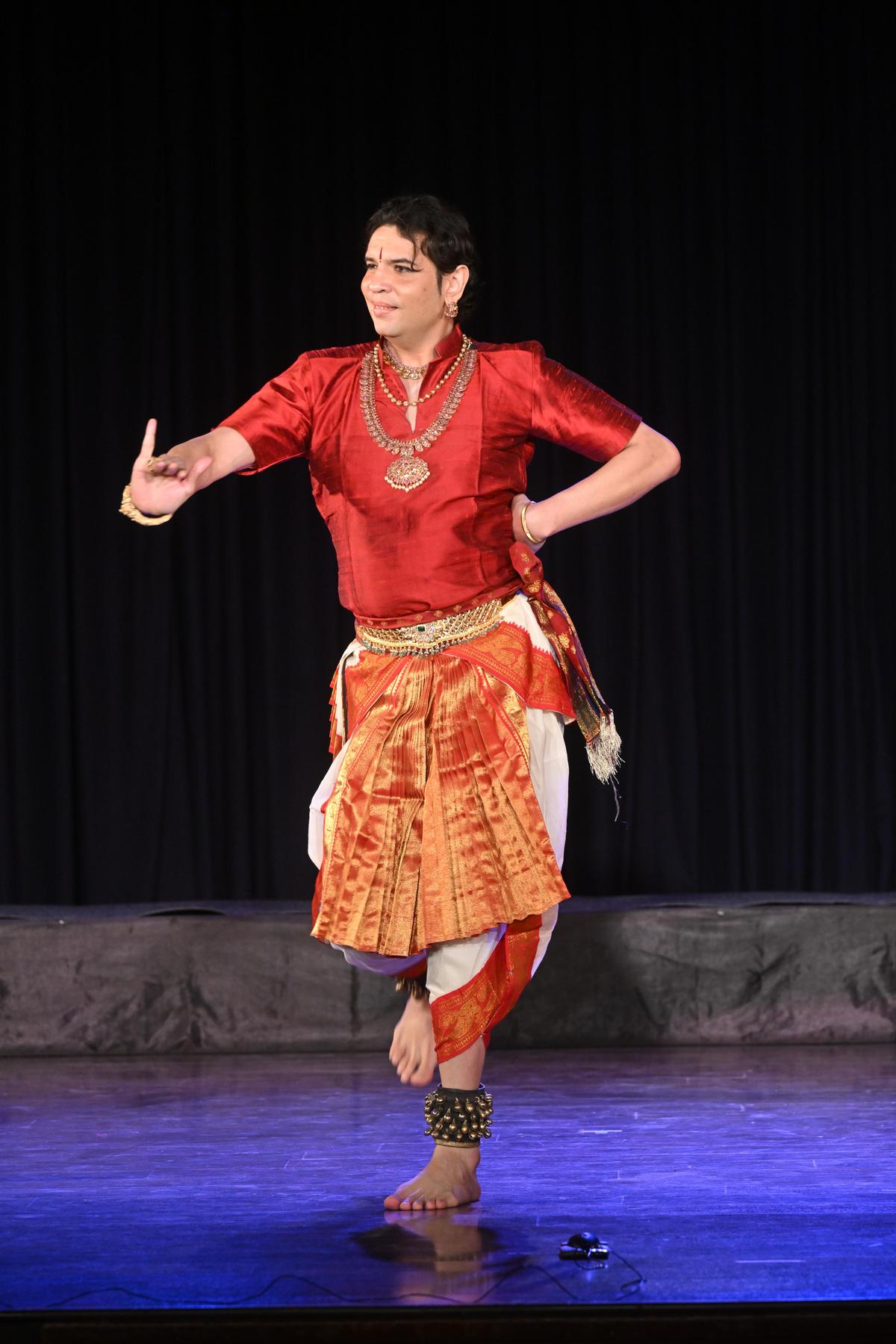
Aniruddha Knight.
| Photo Credit:
SRINATH M
Aniruddha Knight is the ninth generation of a celebrated family of musicians and dancers. His ‘Bharatanatyam’ performance was, however, overshadowed by the emphasis on the musical bani and its presentation. While manodharma is intrinsic to music, one felt it was carried too far in the dance, when one had to constantly look at the musician to take cues. There was subsequently no connect with the audience. The music was, however, divine, including explanations of the sangatis traditionally used and the sensitive and delicate way of handling sahithya.
Using Ghanam Krishna Iyer’s ‘Edhai kandu nee ichai kondai’ (Kalyani), Papanasa Mudaliar’s ‘Mugathai kaatti’ (Bhairavi), Krishna Iyer’s ‘Mathe avar seidha vanjanai marapena’ (Bhairavi) and ‘Velavare umai thedi’ (Bhairavi) as examples, Aniruddha emphasised the role of music in dance, and insisted that dancers need to be musically inclined.
Accompanying him were Usha Sivakumar and Vishal Kumar (vocal), Adyar Gopinath (mridangam), Purushottam (kanjira), Madurai T. Kishore (violin) and Sivakumar (flute).
Published – December 20, 2025 02:38 pm IST