- December 24, 2025
ISRO Launches BlueBird-2 Today: How This Mission Strengthens India’s Commercial Space Profile

Last Updated:
The Indian Space Research Organisation is set to launch the BlueBird Block 2 satellite on December 24, 2025, from the Satish Dhawan Space Centre in Sriharikota.
ISRO to launch US satellite Bluebird Block-2
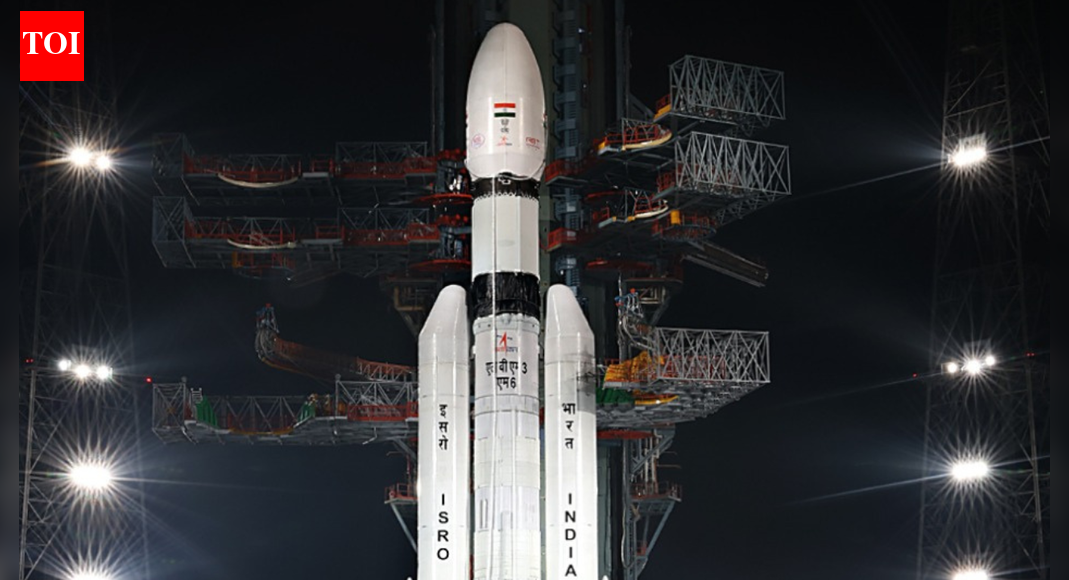
ISRO is set to launch the BlueBird Block-2 satellite this morning aboard its LVM3-M6 rocket from the Satish Dhawan Space Centre. The spacecraft, weighing around 6100 kilograms, will be inserted into a 520-kilometre circular low-Earth orbit under a commercial agreement with NewSpace India Limited.
The launch stands out because it brings together two elements shaping ISRO’s commercial trajectory: the LVM3’s capacity to place heavier satellites in low-Earth orbit and the rising global demand for missions supporting direct-to-mobile communication technology.
It is the rocket’s heaviest LEO payload to date and its third dedicated commercial mission, underscoring how India’s heavy-lift vehicle is being used in large, next-generation international telecom projects.
A Satellite Designed For Direct-To-Mobile Communication
BlueBird Block-2 forms part of a low-Earth-orbit constellation aimed at enabling mobile connectivity directly through satellites. The system is designed to support voice and video calls, text messaging, broadband data and streaming on 4G and 5G networks without requiring specialised antennas or satellite equipment on the user’s device.
The spacecraft carries a 223-square-metre phased-array antenna, the largest commercial communications antenna to be deployed in low-Earth orbit. Once unfolded in space, the antenna forms thousands of signal cells capable of receiving faint transmissions from standard smartphones. The satellite is engineered to provide connectivity across areas where terrestrial networks remain limited, including oceans, deserts, remote highland regions and disaster-affected zones.
Earlier versions of the BlueBird series were launched in 2024, and the wider constellation is intended to expand coverage across the United States before moving to other regions. As additional satellites are deployed, the system will be able to hand over links between spacecraft to maintain uninterrupted access when ground-based towers are unavailable.
How BlueBird Block-2 Works Differently From Traditional Satellite Systems
Unlike conventional satellite communication platforms that require dishes or terminals, BlueBird Block-2 functions as a mobile tower in space. When a user moves beyond the reach of terrestrial coverage, the smartphone signal travels directly to the satellite overhead. The spacecraft then relays the signal to a gateway on the ground, from where it enters the user’s mobile operator network.
The system relies on capturing low-power signals from standard devices, with the satellite correcting for natural delays and frequency shifts caused by orbital motion. Only a limited number of ground gateways are needed in each region, reducing the infrastructure requirements typically associated with satellite communication.
This design places the satellite in a category of emerging direct-to-device systems that aim to complement terrestrial networks and provide continuity during emergencies or infrastructure disruptions.
Why The Payload Sets A New Mark For LVM3
BlueBird Block-2 is the heaviest satellite LVM3 has carried to low-Earth orbit. The vehicle’s previous heavy payloads included the CMS-03 communication satellite and the multi-satellite batches launched for OneWeb. The current mission exceeds these earlier benchmarks, demonstrating the vehicle’s ability to handle larger spacecraft destined for precise circular orbits.
The official mission profile places the satellite in a circular orbit at 520 kilometres, with a semi-major axis of 6898 kilometres and an inclination of 53 degrees. The spacecraft is scheduled to separate from the upper stage at around 942 seconds into flight.
How LVM3 Delivers The Mission
LVM3 is configured with two S200 solid strap-on motors, an L110 liquid core stage and a C25 cryogenic upper stage. The vehicle stands 43.5 metres tall, weighs 640 tonnes at lift-off and uses a 5-metre diameter payload fairing suitable for large commercial spacecraft.
The mission begins with the ignition of both S200 boosters at liftoff. These separate at around 132 seconds. The L110 core stage ignites shortly after launch and continues operating until its separation at roughly 301 seconds. During ascent, the payload fairing is released at around 174 seconds once the vehicle has cleared the dense part of the atmosphere. The cryogenic C25 upper stage ignites at roughly 304 seconds and carries the satellite to its injection point.
The LVM3-M6 mission is the rocket’s sixth operational flight and is classified as a dedicated commercial mission, consistent with ISRO’s growing portfolio of international launch services.
Why This Mission Matters For ISRO’s Commercial Expansion
Today’s mission reflects the increasing use of LVM3 for large commercial payloads that require delivery into low-Earth orbit. Direct-to-mobile connectivity has become a major area of global satellite activity, and spacecraft designed for this purpose typically carry large phased-array antennas and require precise orbital placement.
By launching BlueBird Block-2, ISRO demonstrates its ability to support international operators building next-generation communication networks. The combination of payload mass, orbital precision and mission classification highlights the relevance of LVM3 within the global commercial launch market.
The mission also adds to the vehicle’s track record following earlier operations that included lunar missions and 72 satellites launched across two commercial flights. These consecutive missions have contributed to establishing LVM3 as a dependable heavy-lift system suitable for a wide range of payload requirements.
What Happens After Deployment
Following separation, BlueBird Block-2 will carry out on-orbit deployment and validation procedures, including the unfolding of its 223-square-metre antenna. The satellite will then undergo performance checks before being integrated into the wider constellation. Its operational timeline will depend on further satellite launches, regulatory approvals and gateway arrangements in different regions.
For India, the mission concludes the year with a demonstration of its ability to place heavy, advanced commercial spacecraft into low-Earth orbit. As space-based mobile connectivity networks continue to grow, launches of this nature illustrate the direction of ISRO’s commercial role in the global market.
December 24, 2025, 08:21 IST
Read More