- January 17, 2026
With Nepal’s largest party divided ahead of polls, EC decides on legitimacy dispute
An already hard-pressed Election Commission (EC) of Nepal had been working overtime, not just because of the scheduled March 5 parliamentary elections, but also due to a high-stakes case it had to resolve by January 20.
Two factions of the Nepali Congress (NC), the country’s oldest party, had submitted competing claims to legitimacy. The EC had to recognise one faction before the deadline for filing nominations for direct elections — unless the factions reconciled.
One faction is led by youth groups, with Gagan Thapa, 49, at the helm, identifying as reformists, while the other is headed by Sher Bahadur Deuba, a five-time Prime Minister and two-time party president.
After the September Gen Z protests, the dissident faction demanded a leadership change. They said failure to reform would disrespect the spirit of the movement and that participating in elections under the old guard would damage the party’s poll prospects. The faction argued that a “special” general convention was the only way forward.
The party establishment, led by Mr. Deuba, rejected the demand. Tensions rose, and the reformist camp went ahead with the “special” convention on January 11-15 — an act the Deuba faction saw as a disciplinary breach and procedural violation. The NC now stands divided.
Late night on Friday, the Election Commission recognised the Thapa faction as the legitimate Nepali Congress.
The trigger point
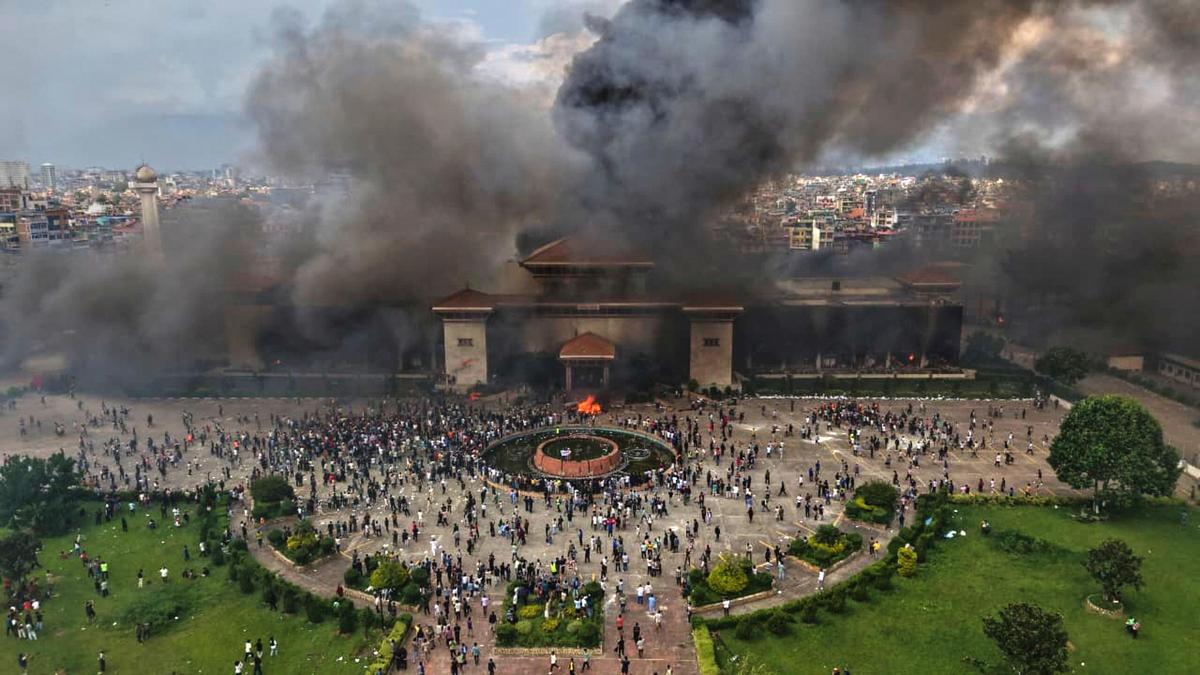
The Gen Z protests on September 8-9, which left 76 dead, reshaped Nepal’s political landscape. Traditional parties, including the Nepali Congress and the Communist Party of Nepal (Unified Marxist-Leninist), which were in power, were ousted from the government. The movement called for an end to corruption and misgovernance, while also signalling the need for internal reforms within established political forces.
“The Gen Z movement was a crucial phase,” said Congress leader Shankar Tiwari, who belongs to the Thapa camp. “The message was clear: it was time for reform. The young and those seeking change made their demand. But the party leadership refused.”
Attempts at reconciliation at multiple levels failed. When the Deuba camp expelled Mr. Thapa for five years, the special convention elected him as the party leader. This raised a legal question: which faction represents the “real” Nepali Congress?
The reformist camp claimed legitimacy based on the special convention, held as per party statutes — over 40% of delegates from the last convention requested it, and more than 60% of those delegates supported it. The Deuba faction rejected this, arguing that the convention violated party rules.
Political manoeuvring
Deuba, 79, faced public anger during the Gen Z protests; demonstrators attacked his home and assaulted him. Following the protests, he appointed the vice president as officiating party president in October, signalling his retirement. But in November, he resumed an active role, overseeing candidate selection for proportional representation.
“The brazen display of undemocratic behaviour by Mr. Deuba was startling. The chances of suffering badly at the elections if we went to the polls under the old leadership were high,” said Mr. Tiwari. “A special convention was a necessity. We needed to send a message of change.”
The special convention, initially seen as a move to make the old guard fall in line, then reached a point of no return, with the dispute landing at the EC. Questions since arose over the future of the NC, a party that has been at the centre of almost all of Nepal’s political movements since 1950.
Concerns had also grown over whether the March 5 election schedule could be delayed.
Dinesh Kafle, an academic and columnist, earlier said that if the legal status of the factions was not resolved, it could lead to further crisis within the party, as they will not be able to decide the names of first-past-the-post candidates.
“Further, it may affect the elections, because an election held amid a legal crisis in the largest political party will lose moral legitimacy,” he had said. “Even the elections could be postponed, since the CPN-UML is also looking for such an opportunity.”
The uncertainty had come against the backdrop of Nepal’s recent political upheaval. Nepal’s last general elections were held in 2022, with the next originally due in 2027. Following the Gen Z protests, the elected government fell, an interim administration led by a former Chief Justice took charge, Parliament was dissolved, and fresh elections were scheduled for March.
Acting Chief Election Commissioner Ram Prasad Bhandari had said early on Friday that the EC would analyse matters within the framework of the Constitution, Acts, and laws. “The Commission will not make decisions beyond legal procedures,” he had said.
Possible impact
Recognition by the EC is crucial. The faction acknowledged as the legitimate NC, the one headed by Mr. Thapa, will retain the party flag and election symbol. Without recognition, they would have remained a breakaway faction, unable to contest polls under the party banner, since the registration deadline has passed. But the poll prospects of the Deuba-led faction, if it had been recognised, are also likely to diminish, observers say.
A divided party would have had to contend with parties like the UML, which has a strong organisational base, and the Rastriya Swatantra Party, a new player that enjoys the support of an electorate fatigued with traditional parties.
If election outcomes are set aside for now, observers say, the intervention made by the young cohort in the NC signals a fundamental shift in Nepali politics.
“This was a much-anticipated intervention from the second-generation leaders of the party, at least when it comes to changing party leadership,” said Mr. Kafle.
“There will certainly be some changes in the way the newer leaders carry out the party functions, and they have the added challenge of meeting the expectations of the Gen Z in the way they function.”
“But it will be a long time before we see any generational shift in the party’s ideology and political praxis,” he added.