- January 17, 2026
From CITB to BDA, has the agency delivered on its objectives?
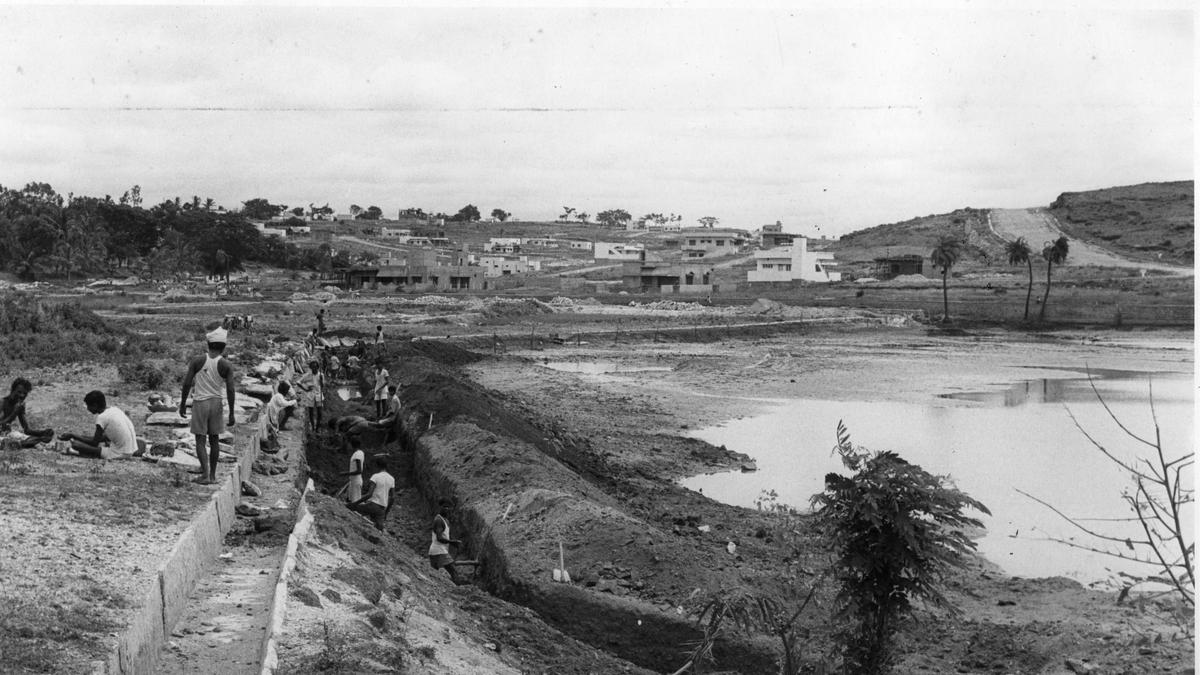
The Bangalore Development Authority (BDA), though maligned by corruption charges over the years, remains a key entity for residents’ house-owning dreams. The authority, started in 1976, has turned 50.
BDA was preceded by the City Improvement Trust Board (CITB), a colonial institution which had its roots in the plague of the 19th century with a focus to improve sanitation. While cities like Mumbai, Kolkata, and Mysuru got their CITBs in the early 20th century, Bengaluru was a late entrant, with its CITB formed in 1945, after the plague swept the city in the 1890s.
Bengaluru responded to the plague with planned layouts of Basavanagudi and Malleswaram. One of the biggest achievements of CITB was Jayanagar, which was then Asia’s largest planned layout.
CITB to BDA
However, all was not well. Historian Janaki Nair, author of The Promise of the Metropolis: Bangalore’s Twentieth Century, said there were a lot of illegal layouts that had mushroomed in the city by the 1970s, which were being regularised through a “reconvey scheme.”
“There was still a belief that this process could be corrected, regulated a bit better than what was happening. With that aim, then Chief Minister D. Devaraj Urs formed the BDA,” she said.
Dissolving the earlier Bangalore City Improvement Trust Board (CITB), Urs formed the BDA in 1976, with a dedicated law. Former bureaucrat Chiranjiv Singh, then Principal Secretary to Urs, recalled that it was felt the city was growing at a fast pace and there was need for a planned and regulated development to channelise the same. So the BDA was formed on the lines of the Delhi Development Authority (DDA).
While CITB was tasked with the housing function, overlapping with the Housing Board, planning was the domain of the Bangalore City Planning Authority. The BDA brought the development and planning functions under one body for the first time. With planning functions, the BDA was also the regulator of the city’s development.
But the BDA is still known more for its layouts. The CITB and the BDA have developed nearly 70 well-planned layouts. The BDA also introduced the lottery system for allotment of sites, owing to high demand, which had a good consequence of breaking caste-wise segregation that marked earlier layouts and produced the city’s first truly mixed layouts after the PSU housing colonies.
A BDA site is still big in the imagination of the city, though recent layouts mired in litigation and delay in providing infrastructure have chipped away at its numero uno status. But many have argued that the BDA has degenerated into “a real estate developer”, building layouts where lands were available and sites were profitable. Not only is the BDA accused of catering only to the middle and upper middle classes through its layouts, but also of failing to develop layouts in congruence with the economic geographies of the city.
What about planning?
But has the BDA achieved its objective of checking unplanned development and mushrooming of illegal layouts and development?
“Time has shown that the BDA in fact not only failed to check illegal and unplanned development, but has in many ways enhanced it,” Ms. Nair observed. “Perhaps, the real estate market was well developed in Bengaluru by the time Urs formed the BDA. It was shutting the stable doors after the horses had bolted,” she said.
“The State seems to be able to provide for all people’s housing needs only by allowing illegalities and its post-hoc regularisation. In many ways planning is generating the unplanned. In the BDA as planning and development came together, planning was undermined by development and development was devolved to a host of private players, including house-building cooperative societies and the BDA was just one of them,” Ms. Nair said.
Film and television director T.N. Seetharam recalls how farmers’ leader M.D. Nanjundaswamy pulled them into a three-day protest in Cubbon Park against the formation of the BDA in 1976.
In a Facebook post, he recalled that on the day the Urs government announced the formation of BDA, Prof. MDN asked him what time he took to reach Gandhi Bazaar from Malleswaram, and when he answered 15 minutes, he shot back that everyone would buy a car and it would take half an hour in the next five years. He said sites will cost over 30 lakh in five years. “We sat on a protest for two days at Cubbon Park asking for a Bangalore Maintenance Authority instead, arguing the city had already grown enough, but nobody cared. Today, it takes nearly 1.5 hours to travel from Malleswaram to Gandhi Bazaar,” he noted.
Published – January 17, 2026 07:00 am IST