- January 16, 2026
‘28 Years Later: The Bone Temple’ movie review: Ralph Fiennes and Jack O’Connell are worthy adversaries in a post-apocalyptic nightmare
A still from ‘28 Years Later: The Bone Temple’
| Photo Credit: Columbia Pictures
What will be the soundtrack of the world hurtling towards destruction? According to Ralph Fiennes’s Dr Ian Kelson there will be Duran Duran (‘Ordinary World’, ‘Girls On Film’, ‘Rio’), Radiohead (‘Everything In Its Right Place’) and Iron Maiden (‘The Number Of The Beast’). Icelandic composer Hildur Guðnadóttir has created an exquisite score for this sequel to Danny Boyle’s 28 Years Later, with the needle drops flawlessly timed.

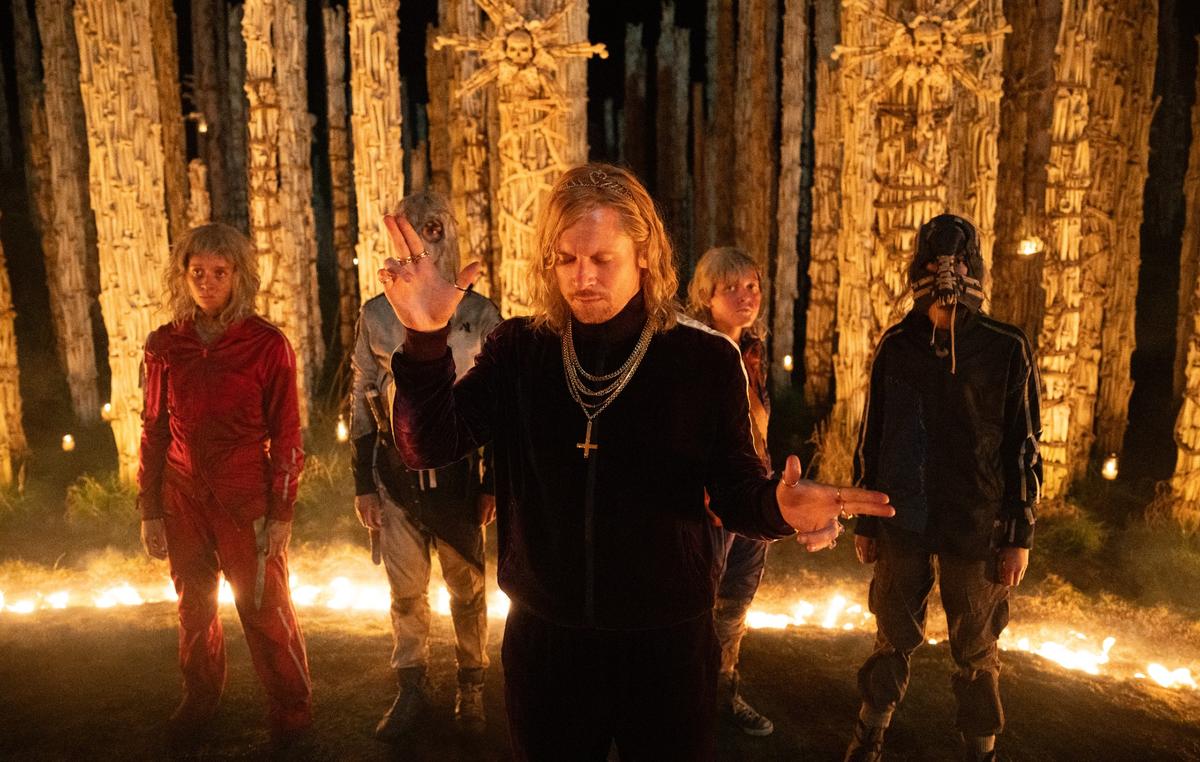
28 Years Later: The Bone Temple, the fourth instalment of the 28 Days Later film series, picks up where the last movie left off, with young Spike (Alfie Williams) captured by the psychopathic gang leader Sir Lord Jimmy Crystal (Jack O’Connell) and his feral “Jimmies”. Spike earns his place in the gang by accidentally killing one of the Jimmies.
28 Years Later: The Bone Temple (English)
Director: Nia DaCosta
Cast: Ralph Fiennes, Jack O’Connell, Alfie Williams, Erin Kellyman, and Chi Lewis-Parry
Runtime: 109 minutes
Storyline: Dr. Kelson finds himself in a shocking new relationship with consequences that could change the world as he knows it, while Spike’s encounter with Jimmy Crystal becomes a nightmare he can’t escape
Shocked and disgusted at the brutality and violence of the Jimmies and their depraved leader, Spike finds a kindred spirit in Jimmy Ink (Erin Kellyman). Kelson, meanwhile, continues to build a memorial to all the lives lost to the rage virus.
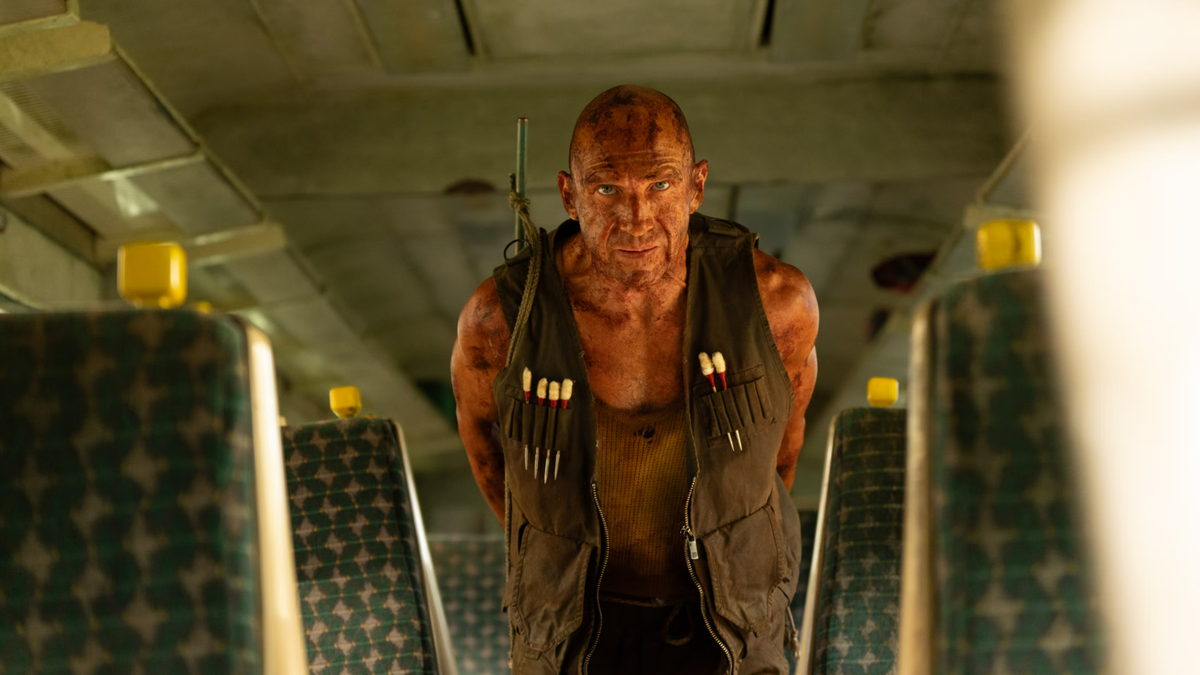
An imposing Alpha, whom Kelson names Samson (Chi Lewis-Parry), is addicted to morphine and comes daily to Kelson for a hit, giving Kelson the idea of developing and trying out an antidote to the rage virus on Samson.
A still from ‘28 Years Later: The Bone Temple’
| Photo Credit:
Columbia Pictures
Written by Alex Garland, who wrote the earlier movie as well, Nia DaCosta takes the directing reins from Boyle to create, in O’Connell’s words, a “weird, deranged cousin” of the earlier film. While the sweeping, heart-breaking beauty of the earlier film is dialed down, The Bone Temple thrums with the earlier film’s energy.
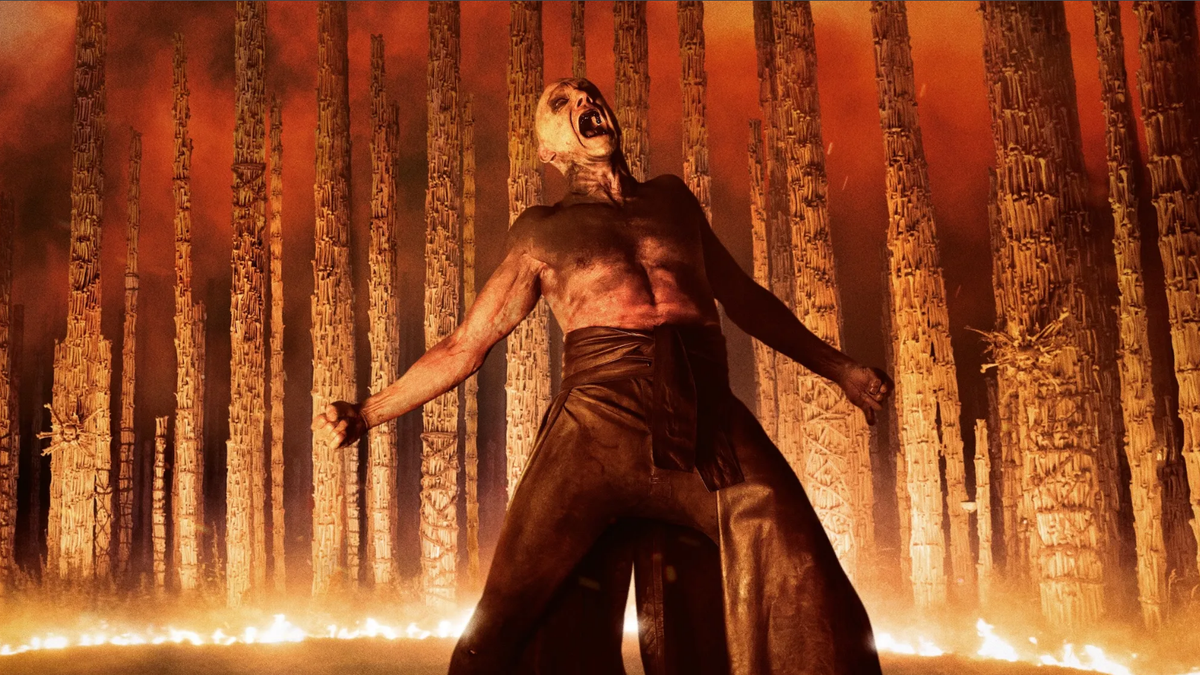
There are still scenes of stark beauty, including the ivory columns and pyramids of Kelson’s memorial. The moth alighting on the pelvic bone that Kelson is curing is pregnant with foreshadowing. While the zombies are not on screen so much, they are a presence nevertheless and the violence is gnarly.

The build-up to the meeting between Kelson and Jimmy (“the Satanist and the atheist”) has a satisfying pay-off. Fiennes burns up the screen as Kelson, whether humming Duran Duran, or doing a full-on performance of ‘The Number Of The Beast’.
And there are the quieter moments too, when he remembers the before days, when one was sure of the order of things or when he wryly tells Samson, he is treating him free of charge, as he is NHS.
A still from ‘28 Years Later: The Bone Temple’
| Photo Credit:
Columbia Pictures
O’Connell as Jimmy is an apt foil to Fiennes — at once deranged, demented and childlike, never having grown up after being betrayed by his father when he ran away as a child from the ravening hoardes.
The first film dealt with isolationism and the nature of mythmaking; this one looks at the nature of evil; and the third, also to be directed by Boyle, will look at redemption. With a view to the third film, Jim (Cillian Murphy) the survivor from the first film, makes an appearance towards the end of 28 Years Later: The Bone Temple quoting Winston Churchill’s “Those who fail to learn from history are doomed to repeat it.”

The best of genre films rise above the framework to ask weightier questions, which is what the 28 days Later movies have consistently done for zombie movies. That deep thought, achieved in such style and with a rocking soundtrack, is a delicious extra.
28 Years Later: The Bone Temple is currently running in theatres
Published – January 16, 2026 10:06 pm IST