- January 21, 2026
Dr.Mj.Balachandran Talks About His Book “Quantum Engineering on Cloud Computing”
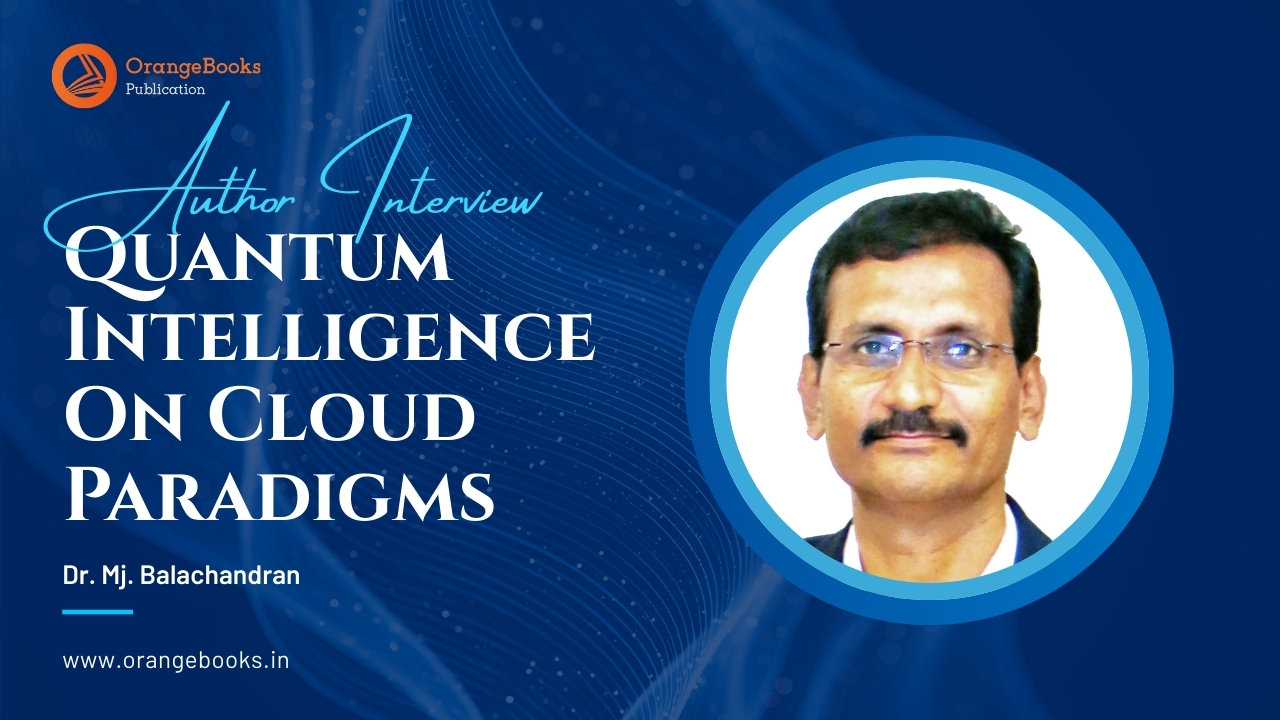
About the Author:
Dr. M. J. Balachandran holds a Doctorate in Multi-level Authentication for Accessing Cloud Services through REST APIs. With over 30 years of extensive technical expertise, he has built a distinguished career spanning a wide spectrum of technologies including C++, Java/J2EE, .NET, ASP.NET, VB.NET, COBOL, Siebel, Mainframes, and mission-critical enterprise systems. His professional journey covers the entire software engineering lifecycle—from architecture and prototyping to large-scale system development—and includes managing projects exceeding USD 90 million in value. Throughout his career, Dr. Balachandran has served in leading IT organizations such as Wipro, Intellect Design Arena (formerly Polaris), Virtusa, and Ramco Systems, holding pivotal roles including Technical Architect, Solution Architect, Program Director, and Vice President. He is widely recognized and appreciated by senior leadership across the IT industry for his technological depth and leadership. As the Chairman and Managing Director of the MJ Group of Companies, he has championed numerous cloud-computing initiatives, delivering technical presentations, mentoring programs, and free knowledge-sharing sessions for underprivileged students of government colleges under the University of Madras, India. Dr. Balachandran has earlier authored three technical books: 1. Cloud Computing and Architectural Design Patterns 2. Artificial Intelligence and Robotics on Cloud Engineering 3. Blockchain on AI/ML & Cloud He has also presented multiple research papers at international conferences and has published widely in reputed international journals. His career features numerous awards, participation in a variety of advanced technical trainings, and international certifications. As an IT specialist, he has travelled extensively to several leading technology-driven nations.
Exclusive interview with the author
Q: What Inspired You To Write This Book?
A: This book was inspired by the rapid and unprecedented convergence of quantum computing, artificial intelligence, robotics, and cloud technologies—fields that were once explored independently but are now shaping a unified computational paradigm. As these disciplines evolve, I observed a growing gap between theoretical advances and practical, system-level understanding, particularly in how quantum capabilities are deployed through cloud infrastructures.
Drawing from decades of experience in building large-scale, mission-critical systems, I felt a strong need to present these emerging technologies through an engineering lens—connecting foundational principles with real-world architectures, design patterns, and applications. My motivation was to create a structured yet accessible guide that helps learners, researchers, and practitioners navigate this complex landscape and contribute meaningfully to the next generation of intelligent, quantum-enabled systems.
Q: Can You Tell Us About The Book?
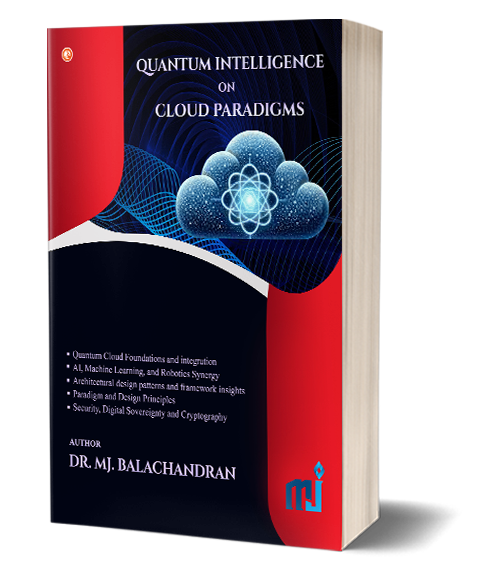
A: This book presents a comprehensive and forward-looking exploration of quantum computing and quantum cloud computing, emphasizing their convergence with Artificial Intelligence (AI), Machine Learning (ML), Robotics, Big Data, IoT, and Cloud architectures. It bridges foundational quantum theory with practical engineering, showing how quantum-driven systems are designed, deployed, and secured in real-world cloud environments.
Structured for both academic and industry audiences, the book progresses from quantum fundamentals and algorithms to quantum communication, cryptography, cloud infrastructure, Quantum-as-a-Service (QaaS), quantum software engineering, and quantum robotics. It highlights modern architectural patterns, hybrid quantum–classical models, and security frameworks essential for scalable and trustworthy quantum cloud platforms.
With a strong learning-by-doing orientation, the book equips readers to understand, design, and implement next-generation intelligent systems—positioning quantum cloud computing as a cornerstone of future digital ecosystems.
Q: What Does The Title Mean?
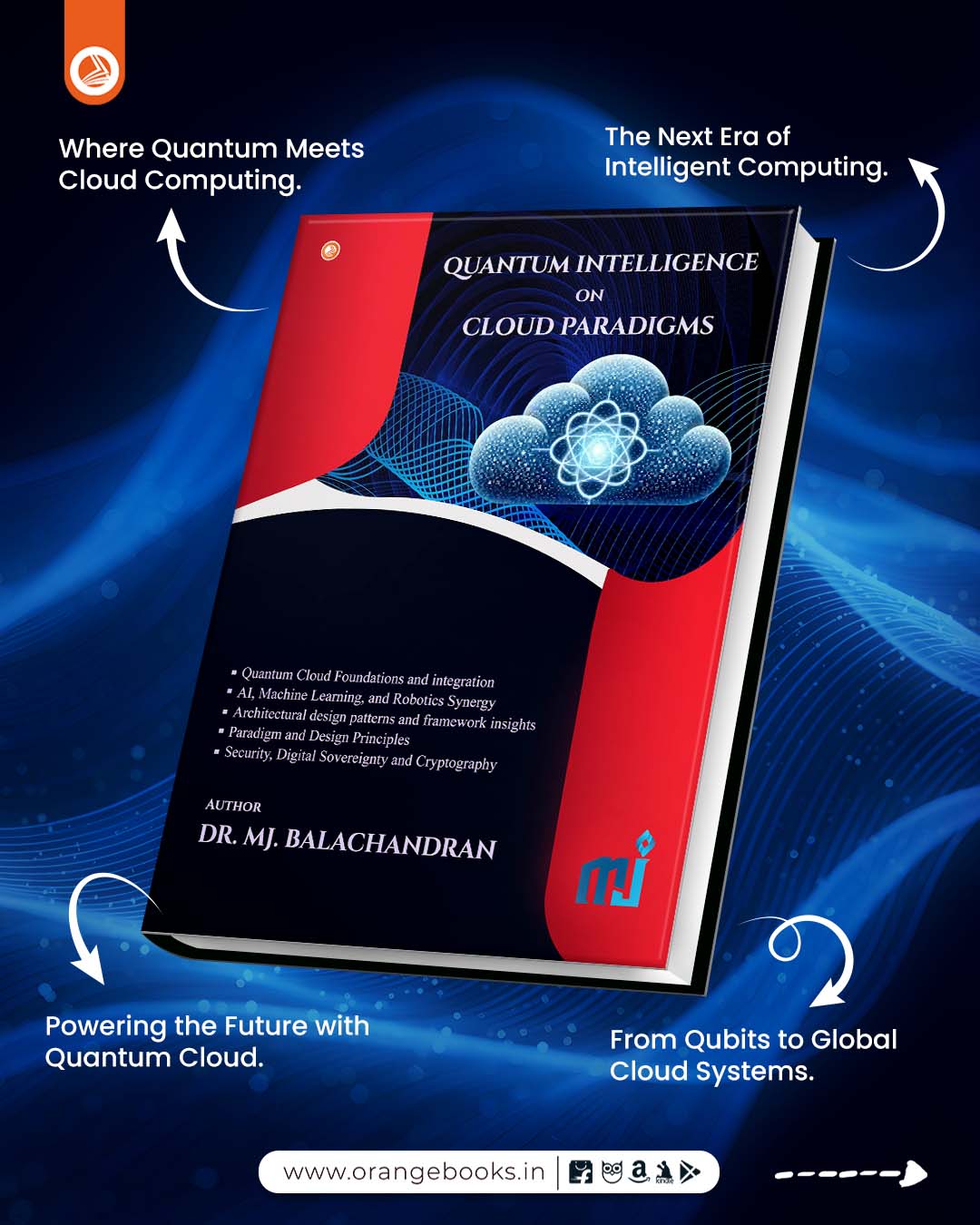
A: “Quantum Intelligence on Cloud Paradigms” means:
The design, deployment, and evolution of intelligent systems powered by quantum computing, delivered through cloud-based architectures, and guided by new architectural, security, and engineering paradigms.
In essence, the title reflects a future where quantum-enhanced intelligence is engineered, scaled, and governed through cloud, enabling secure, intelligent, and globally accessible next-generation computing systems.
Q: How Many Books Have You Written? Which Is Your Favourite?
A:I wrote below three technical books
1. Cloud Computing and Architectural Design Patterns
2. Artificial Intelligence and Robotics on Cloud Engineering
3. Blockchain on AI/ML & Cloud
Favorite is AI and Robotics on Cloud Engg.
Q: Do You Have Any Suggestions To Help Others To Become A Better Writer? If So, What Are They?
A:Read widely and critically – Exposure to different styles, genres, and voices expands your understanding of language, structure, and storytelling.
Write consistently – Treat writing like a muscle: daily or regular practice builds skill, fluency, and confidence.
Embrace revision – First drafts are never perfect. Editing sharpens clarity, flow, and precision.
Seek feedback – Constructive critique from peers, mentors, or editors highlights blind spots and strengthens your work.
Write with purpose – Always know the message or value you want to deliver to your readers.
Q: How Did Publishing Your First Book Change Your Process Of Writing?
A: Publishing my first book taught me the value of structure, clarity, and audience focus. I learned to balance technical depth with readability, to plan content more deliberately, and to approach writing as a disciplined process rather than just inspiration-driven.
Q:What, In Your Opinion, Are The Most Important Elements Of Good Writing?
A: Clarity, structure, and purpose are the pillars of good writing. Every idea should be communicated precisely, the flow should guide the reader naturally, and the content should serve a clear goal—whether to inform, inspire, or persuade. Style, tone, and engagement enhance the experience, but they must support comprehension above all.
Q:What Is The Most Difficult Part About Writing For You?
A:“The most challenging part is distilling complex, technical ideas into content that is both accurate and accessible. Balancing depth with clarity—so readers can understand without oversimplifying—is always a careful, creative effort.”
Q: What Does Success Mean To You? What Is The Definition Of Success?
A: “Success, for me, is creating meaningful impact—whether through innovation, knowledge sharing, or empowering others to grow. It’s not just personal achievement, but the positive difference I leave in people, organizations, and society.”
Q: How Important Is Research To You When Writing A Book?
A:Here’s why research matters so deeply in the writing process:
1. Credibility and Trust
Strong research ensures that every concept, claim, and framework is accurate, defensible, and current. Readers—especially academics and professionals—trust a book when it is clearly grounded in validated knowledge rather than speculation.
2. Depth Beyond Surface Knowledge
Research allows a book to move beyond definitions into why things work, how they evolved, and where they are heading. This depth is what distinguishes a serious technical book from introductory or promotional material.
3. Connecting Theory with Practice
Well-researched writing bridges fundamental theory and real-world application. It helps explain how abstract principles translate into architectures, algorithms, and systems that engineers can actually build and deploy.
4. Responsible Innovation
In fast-moving domains, research helps identify limitations, risks, and ethical considerations, not just possibilities. This balance is critical when discussing transformative technologies like quantum intelligence or AI-driven cloud systems.
5. Original Insight Through Synthesis
While research may draw from many sources, its real value lies in how insights are synthesized. Combining findings across disciplines often leads to new perspectives and design thinking—even without inventing new theories.
Q: What Advice Would You Give To Aspiring Authors?
A: “Follow your curiosity and let passion guide your writing. Research deeply, explain clearly, and balance theory with practical examples. Stay disciplined, connect with your audience, and write consistently—small steps lead to big impact.”
This book is published by OrangeBooks Publication. All rights are reserved with the author & the publisher.