- April 6, 2026
BJP At 47: From 2 Parliamentary Seats To Complete Political Dominance And ‘World’s Largest Party’ Status
Last Updated:
Today, the BJP frames its history as a transition from “struggle to service” aiming to transform India into a fully developed nation – ‘Viksit Bharat’ – by 2047




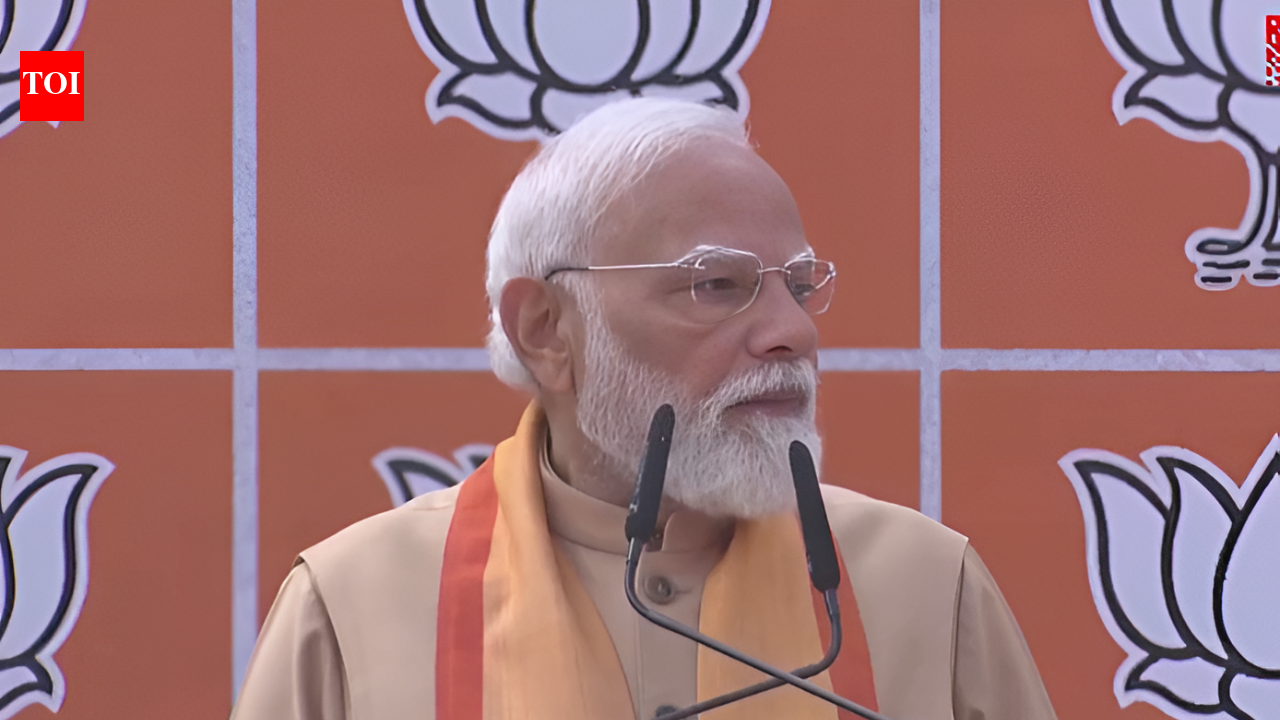
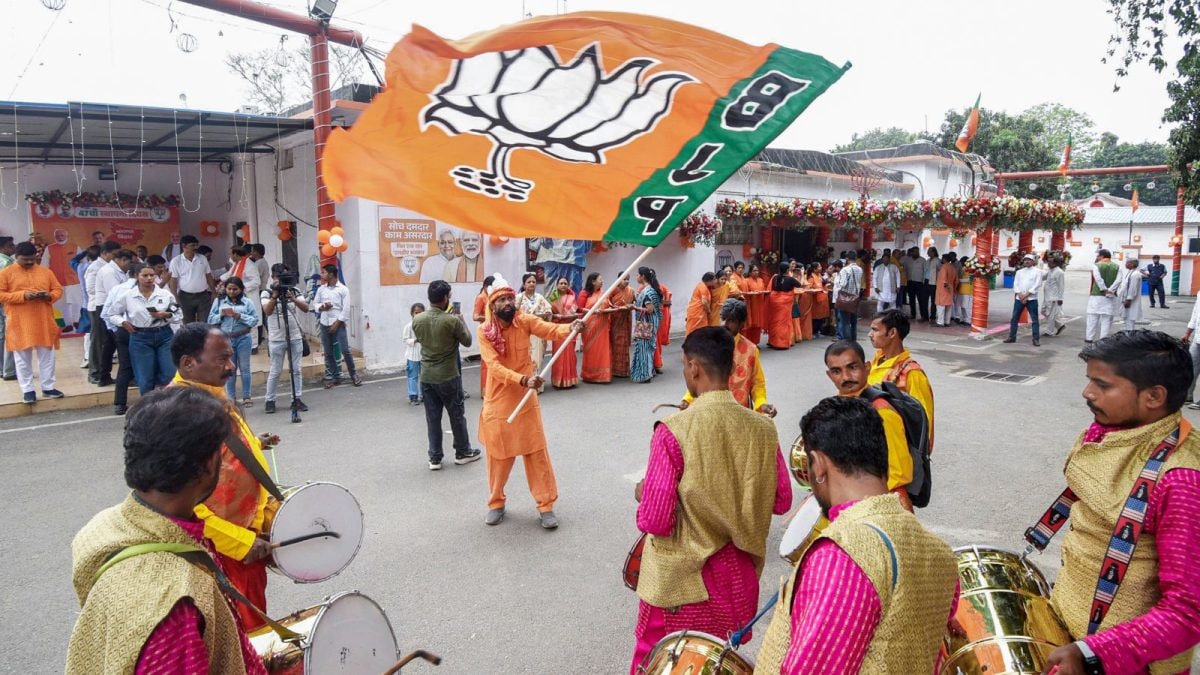
In a message on the 47th foundation day, PM Narendra Modi said the BJP’s growth is a testament to the dedication of its ‘karyakartas’. (Image: PTI)
It has been a journey from the margins to an unprecedented dominance for the Bharatiya Janata Party that marked its 47th foundation day on Monday.
Over these 47 years, the BJP has undergone a transformative journey evolving from recording two parliamentary seats as it started out to becoming the world’s largest political organisation.
This 47th milestone reflects nearly five decades of political evolution, moving from a period of ideological struggle to a position of dominant national governance. Today, the BJP frames its history as a transition from “struggle to service”, aiming to transform India into a fully developed nation – ‘Viksit Bharat’ – by 2047.
Here’s tracing its 47-year journey:
IDEOLOGY AND THE JANA SANGH (1951-1977)
The BJP’s lineage is not confined to its formal establishment in 1980 as its ideological roots trace back to the Bharatiya Jana Sangh (BJS), founded in 1951 by Dr Syama Prasad Mookerjee.
The Jana Sangh was built on the dual pillars of cultural nationalism and integral humanism – the latter propounded by Pandit Deendayal Upadhyaya. These philosophies remain central to the party’s identity even today with Uttar Pradesh Chief Minister Yogi Adityanath describing the BJP as a “vibrant ideological tradition” permeated by the democratic ideals of Mookerjee, Upadhyaya, and Atal Bihari Vajpayee.
The first major shift in this journey took place during the Emergency (1975-77), when the Jana Sangh merged into the Janata Party to defeat the Congress. This “janata experiment” was, however, short-lived.
Internal friction arose over the issue of “dual membership”, specifically the allegiance of former Jana Sangh members to the Rashtriya Swayamsevak Sangh (RSS). When the Janata Party demanded that members choose between the party and RSS, the former Jana Sangh faction split away leading to the official birth of the BJP on April 6, 1980 with Atal Bihari Vajpayee serving as its first president.
RISE OF ‘KAMANDAL’ POLITICS (1980-1996)
The BJP’s early years were marked by significant electoral challenges. Following the assassination of Indira Gandhi in 1984, it was reduced to just two seats in the Lok Sabha.
This setback proved to be a critical turning point, prompting a strategic shift toward more robust ideological posturing. Under the leadership of LK Advani in the late 1980s, the party overtly embraced ‘Hindutva’.
The 1990 Somnath to Ayodhya Rath Yatra acted as a catalyst for massive grassroots mobilisation, catapulting the BJP’s parliamentary presence from two seats to 85 in 1989 and, subsequently, to 120 in 1991. By 1996, it emerged as the largest single party for the first time although Vajpayee’s first government famously lasted only 13 days.
THE VAJPAYEE ERA (1998-2004)
The late 1990s saw the BJP pioneer successful coalition politics through the National Democratic Alliance (NDA).
This era was defined by milestones such as the Pokhran-II nuclear tests, victory in the Kargil War, and a significant focus on national infrastructure, most notably the Golden Quadrilateral project.
Despite the ‘India Shining’ campaign, however, the party lost power in 2004 and spent the following decade in opposition – a period often described as a return to struggle before the next major paradigm shift.
THE ‘MODI WAVE’ (2014 to present)
The election of Narendra Modi as prime minister in 2014 fundamentally altered the Indian political landscape. The BJP became the first party in 30 years to win a full majority on its own, securing 282 seats – a feat it surpassed in 2019 with 303 seats. By 2024, the party continued its dominance into the 18th Lok Sabha.
This period has seen the fulfilment of the party’s long-standing core promises, including the abrogation of Article 370, implementation of the Goods and Services Tax (GST), and construction of the Ram Mandir in Ayodhya. Prime Minister Modi has stressed the party’s growth is a testament to the dedication of its karyakartas (workers).
“Our party has always been at the forefront of serving society, guided by the principle of ‘India First’,” Modi said in a message to mark the 47th foundation day.
WHAT ARE BJP’S CORE PHILOSOPHIES?
At the heart of the BJP’s current governance model is the philosophy of “antyodaya” – the uplifting of the last person in line.
In his message on the 47th foundation day, Adityanath characterised the party’s journey as the “fulfilment of the resolve of antyodaya to rashtrodaya (from the rise of the marginalised to the rise of the nation)”. Current leadership figures also reinforced the mantra of “Nation First, Party Next, Self Last”.
Union home minister Amit Shah reiterated this sentiment, saying the BJP has exemplified its resolutions through action, whether in securing borders or “rekindling the historical essence and vital spirit of Indian culture”. He paid tribute to those who have sacrificed everything to transform the BJP into a “colossal banyan tree” much like Dadhichi, a Hindu sage.
‘VISION 2047’: FROM STRUGGLE TO SERVICE
As the BJP looks toward the future, the objective has shifted toward ‘Viksit Bharat 2047’ – the goal of making India a fully developed nation by the centenary of its independence.
National president Nitin Nabin called upon workers to connect people across India to fulfil this resolve and to “waive bhagwa (saffron) from panchayat to Parliament”. Defence Minister Rajnath Singh said under Modi’s leadership, the party has not only become the world’s largest party but has “firmly established itself at the pinnacle of Indian politics”. He stressed the party remains fully committed to the welfare of all sections of society, receiving “the complete trust and support of the people of India”.
April 06, 2026, 20:22 IST
Read More