- May 24, 2026
China’s Craze To Stay Youthful Is Driving Donkeys To Extinction. Can Science Offer A Solution?
Last Updated:
Scientists in Brazil are racing to offer an alternative that could ease pressure on the animals while still meeting demand for the historic medicine.




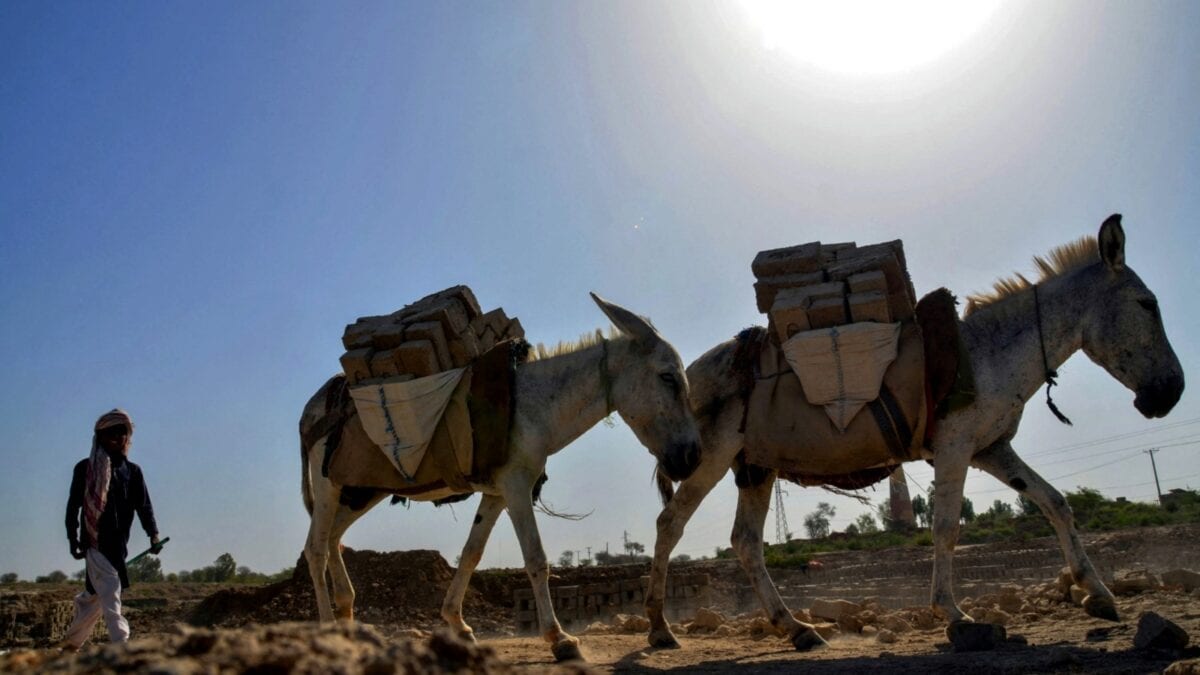
A labourer walks with his donkeys at a brick kiln on a hot summer day in Jaffarabad. (AFP file photo)
China’s strong beauty culture and growing obsession with staying youthful is driving huge demand for ejiao, a traditional anti-ageing tonic made from donkey skin. The surge in popularity among the country’s middle class has created a global supply crisis, pushing donkey populations towards collapse in several regions.
Now, scientists in Brazil are racing to offer an alternative that could ease pressure on the animals while still meeting demand for the historic medicine.
Lab-grown answer to rising demand
Researchers at the Federal University of Parana are developing lab-grown donkey collagen using precision fermentation. The project is led by animal welfare expert Professor Carla Molento, who says the aim is to create a scalable system that produces donkey protein without relying on animal slaughter, the South China Morning Post reported.
She said the lab-made version would be “encoded by the same DNA” as natural donkey collagen, meaning it would retain similar properties. However, it would be far cleaner, free from contamination risks such as heavy metals and disease-causing pathogens often linked to the skin trade.
The method uses microorganisms such as yeast to replicate donkey collagen proteins in controlled conditions. The result is a powder that could be used across different ejiao products.
Pressure on global donkey populations
Ejiao has been used in China for more than 2,000 years and is traditionally made by boiling donkey hides. Once a limited luxury product, demand has surged in recent decades as China’s economy has grown and more consumers seek wellness and anti-ageing treatments.
Researchers warn that the rising appetite is placing severe strain on global donkey populations, as supply struggles to keep up. Some studies estimate millions of hides are needed annually, while donkeys reproduce slowly, making recovery difficult.
Animal welfare groups say the trade has already caused sharp population declines in parts of Africa and Latin America. Brazil recently banned donkey slaughter, while the African Union has also moved to restrict the trade.
Experts also warn that illegal and unregulated sourcing raises disease risks and worsens animal welfare concerns.
Despite this, interest in alternatives is growing. A recent survey in China found many consumers were open to lab-grown ejiao if it was affordable and safe.
Read More