


- December 17, 2025
‘Gachiakuta’ series review: Furious punk rock class war in motion
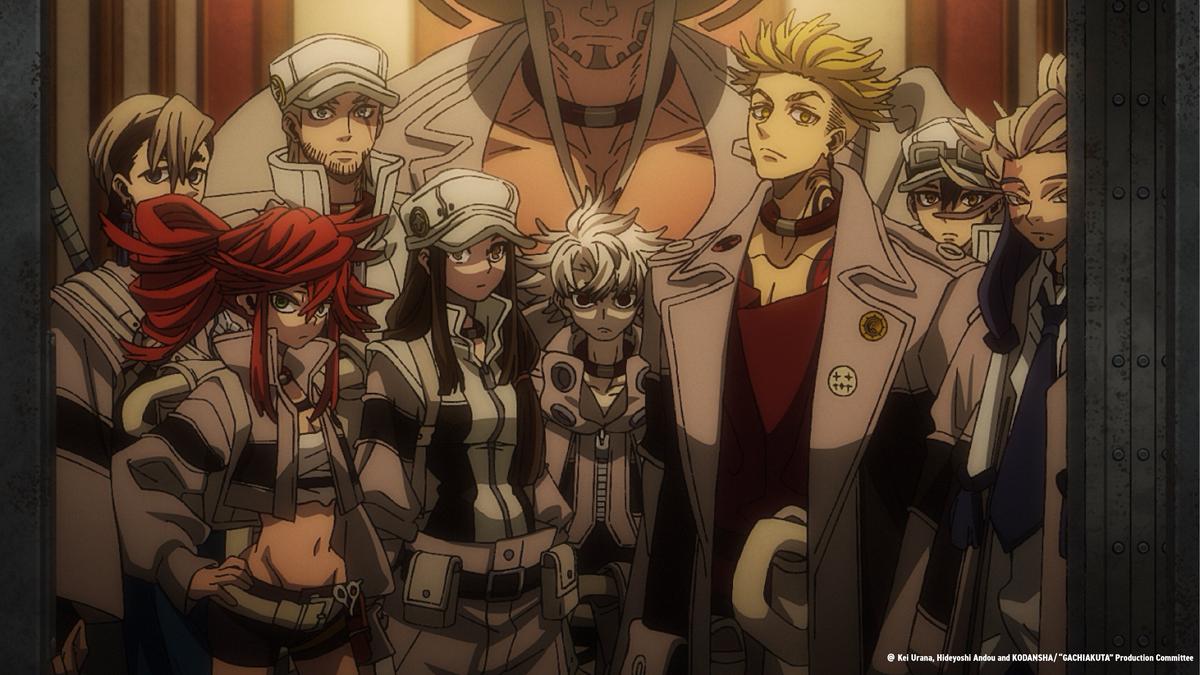
Masks seal faces against radioactive smog, bodies wade through mountains of sentient trash, and a ruling class is insulated safely out of smelling range.
Your brain has already gone to Delhi, hasn’t it? Good instinct. I have just the anime for you.
Kei Urana’s manga, brought vividly to life by Studio Bones, is a story about what happens when society decides who matters and who can be thrown away. In Gachiakuta, the upper-class Sphereites, ensconced in the gleaming heights of a floating city called the Sphere, discard both objects and people with casual cruelty, sending them tumbling into a sprawling miasma called The Pit, where the detritus and residue have congealed into something sentient. Among this mausoleum of neglect, the outcast Groundlings scrape a living among the trash, fending off swathes of Trash Beasts. It is impossible to look at the topography of negligence and apathy metastasising into urban decay and not feel that uncomfortably familiar sense of complicity.
Our protagonist Rudo is an orphaned tribesman, a descendant of criminals, which in the Sphereites’ lexicon renders him permanently suspect. When his guardian Regto is murdered, and he is accused, guilt is automatically assumed, and Rudo is flung into The Pit. He is rescued by Enjin, a mysterious man who introduces him to the Cleaners, an organisation of “Givers” — people who can breathe life into objects, animating the discarded into weapons and tools. The Cleaners exist to hunt the trash beasts that roam the Pit and protect pockets of the slum from annihilation, wielding these Vital Instruments or ‘Jinki’. Enjin tests Rudo, awakening his latent abilities and offering him a place among their ranks. For the first time, Rudo glimpses a way to turn the world’s refuse into agency, and a means to reclaim both power and dignity in a society that has tried to erase him.
Gachiakuta (Japanese)
Director: Fumihiko Suganuma
Cast: Aoi Ichikawa, Katsuyuki Konishi, Yoshitsugu Matsuoka, Yumiri Hanamori, Yuuki Shin, Satoshi Hino
Runtime: 25 minutes
Episodes: 24
Storyline: In a floating city where the rich discard their waste and people, Rudo is framed for murder and thrown into The Pit, where a hellscape of mutated garbage beasts dwell

Bones’ animation captures a kinetic energy that accentuates the chaos of the Pit. Graffiti sprawls across walls and rusted structures, asserting presence and identity. Motion lines slash like knives, textures smear like fingerprints, and light pierces the muck in jagged shards. The studio behind shounen hits like My Hero Academia and Fullmetal Alchemist: Brotherhood translates Urana’s sketchy linework faithfully, preserving its unpredictable vigour and giving the story a tactile immediacy. The aesthetics recall the punk-inflected chaos of SEGA’s Jet Set Radio, the hyperactive textures of The World Ends With You and the Spider-Verse, and even the grimy street sensibilities of early Akira.
Rudo’s powers, as a Giver, articulate the story’s moral politics. Vital Instruments are extensions of material empathy. Each carries the biography of its wielder, transforming the forgotten into emblems of remembrance. What society refuses to value gains agency, and the act of reclamation becomes ethical. There is an implicit critique here because mere attention and care become something revolutionary.
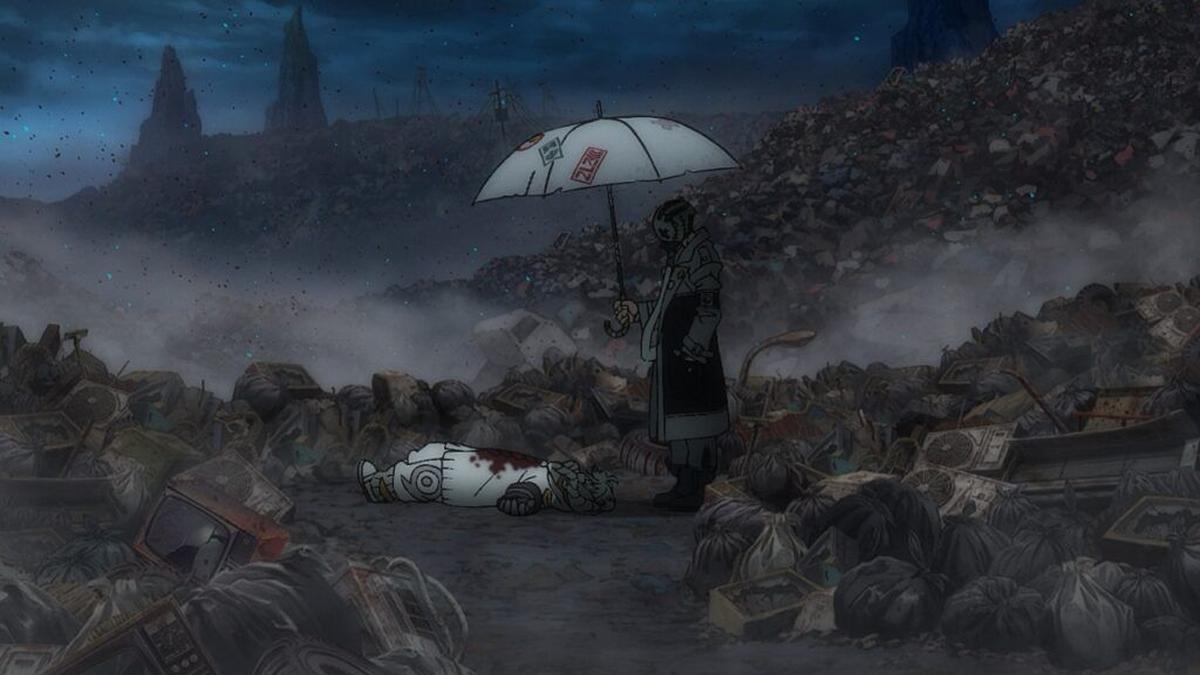
A still from ‘Gachiakuta’
| Photo Credit:
Crunchyroll

Social disparities also permeate the visual grammar. While the Sphereites drift in ceremonial whites and golds atop, the Groundlings endure heat, stench, and derision. The series allows these contrasts to speak through gesture, posture, costume and the oppressive architecture of The Pit. The class divide feels like a sensory experience, echoing the faint but inescapable “smell of the poor” that haunts Bong Joon-ho’s Parasite.
The violence is blunt and immediate, but feels characteristically rooted in shounen tradition. Moments of levity and fleeting hope punctuate the tension. Early scenes with a soiled toilet plunger, an introduction to sweets, and a young spellcaster turning spray cans into fireworks, offer some respite for the carnage to follow later in the season. The series is occasionally overwhelming and often absurd, but those exaggerations are purposeful. Bones has captured the peculiar vitality of Urana’s edgy world, and the story feels messy and alive.
As the season pushes into the later Trash Beast Battle Arc, Gachiakuta sharpens from an anarchic survival story into something more openly confrontational. The Trash Beasts stop reading as random manifestations of pollution and are slowly understood as engineered symptoms of a system that mutates neglect into violence — a logic Delhi folk may recognise without needing to look much further than ouside their own windows.

The arc also reorients our relationship to certain characters, particularly with Amo. Introduced as abrasive, malignant and unsettling, her abilities to manipulate memory through scent, bending others’ perceptions until affection feels compulsory, feel particularly cruel. But as her history surfaces, that discomfort curdles into empathy. Sold by her own mother, sexually exploited young, and left with nothing but the clothes on her back, Amo’s manipulative powers now read more as learned survival. Her need to be remembered and to be wanted is written into her weapon, and the anime is patient enough to let us digest that subversion without pleading for sympathy.
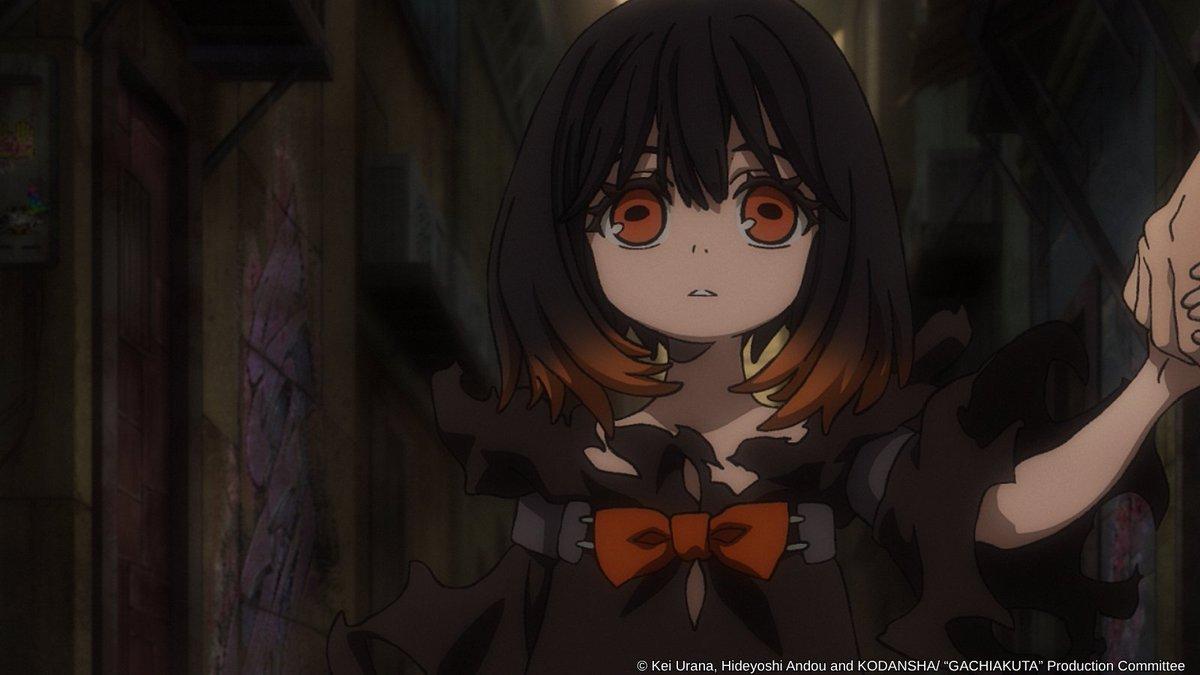
A still from ‘Gachiakuta’
| Photo Credit:
Crunchyroll
The series’ big-bad Zodyl also looms over the arc as an ideological counterweight. His experiments with Trash Beasts and the secrets of The Pit and the Givers expose a more radical response to class stratification — one that embraces cruelty as proof of worth. Where the Cleaners reclaim discarded objects through care, Zodyl weaponises rejection itself, turning outcasts, rejects and corrupted materials into engines of violent selection. It’s class resentment stripped of romance and recast as brutal, empirical control over the vulnerable.

The visceral blitzkrieg of sound and vision for the anime’s opening sequence is also a highlight. Set to Paledusk’s “HUGs,” a ferocious metalcore anthem, it’s a full-throttle introduction to the series’ rebellious spirit.
Taken together, the Trash Beast Battle Arc blows Gachiakuta open. What has taken root alongside the tension is an unapologetically selfish optimism. A class war sits on the horizon, and the appeal lies squarely in being front-row for the damage. Urana knows exactly what she is selling — the thrill of watching a rotten system get poked, prodded, and stressed for our entertainment, and the selfish joys of knowing we’ll be around to see the violent uprising that follows in full Bones glory.

Gachiakuta is insurgent in every sense. It’s an aesthetic and political fist through the plexiglas of polite society. It thrums with a punk-rock, heavy-metal restlessness, and its visuals amplify its disorder with margins spilling into the center, and feedback snarling in every frame. The narrative revels in its manifesto for the dispossessed against the hierarchy that consigns lives to invisibility. There’s something deeply provocative in how Urana inhabits and saturates rebellion, which leaves you irresistibly excited over a world that smells so deliciously of anarchy.
If this is only the opening salvo, I can’t wait to see what other glorious, trash-forged rebellions Urana and Bones have tucked up their sleeves.
Gachiakuta is currently streaming on Crunchyroll
Published – December 17, 2025 02:57 pm IST


