- January 17, 2026
Budget 2026 Expectations: Govt May Cap Fiscal Deficit At 4.3%, Push Medium-Term Debt Consolidation, Says ICRA
Last Updated:
The Budget 2026 is likely to increasingly align with a medium-term debt consolidation framework, particularly in view of the forthcoming recommendations of 16th Finance Commission.



On capital spending, rating agency ICRA expects a continued thrust on public investment in FY2027.
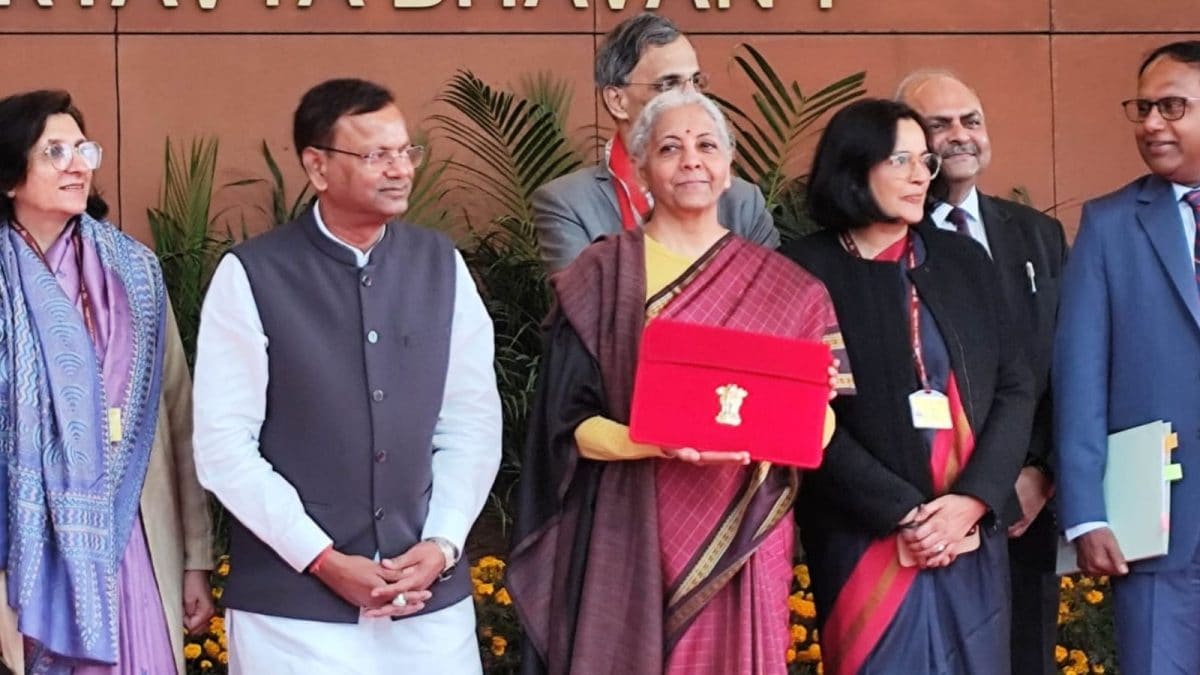
The Union Budget 2026-27 is expected to mark a calibrated shift towards medium-term fiscal consolidation, with the government likely to cap the fiscal deficit at 4.3% of GDP, marginally lower than the Budget Estimate of 4.4% for FY2026, according to rating agency ICRA.
In its Budget expectations note, ICRA said the FY2027 assumptions are based on nominal GDP growth of 9.8% and come at a time when fiscal strategy is expected to move beyond annual deficit targets. According to the agency, the upcoming Budget is likely to increasingly align with a medium-term debt consolidation framework, particularly in view of the forthcoming recommendations of the 16th Finance Commission.
ICRA estimates that the Centre’s debt-to-GDP ratio will decline to around 55.1% in FY2027 from 56.1% in FY2026. To reach the medium-term objective of reducing the ratio to 50% (±1%) by FY2031, the government would need to bring down debt levels by about one percentage point annually from FY2027 onwards. “This consolidation path implies an average fiscal deficit of around 4.3% of GDP during FY2027-FY2031,” ICRA said, while cautioning that the trajectory may not be linear due to one-off expenditure pressures.
On capital spending, the rating agency expects a continued thrust on public investment in FY2027. ICRA projects capital expenditure to rise by around 14% to Rs 13.1 lakh crore, equivalent to 3.3% of GDP. This follows what it expects to be an overachievement of the FY2026 capex target, with spending estimated at Rs 11.5 lakh crore against a Budget Estimate of Rs 11.2 lakh crore.
According to ICRA, the front-loading of capital expenditure in FY2027 is significant, as fiscal rigidities are expected to increase from FY2028 onwards due to higher committed expenditure on salaries and pensions following the recommendations of the 8th Central Pay Commission.
Revenue expenditure growth, however, is expected to remain restrained. ICRA estimates revenue spending to rise by a modest 4% in FY2027, aided by a sharp slowdown in the growth of interest payments to about 7.5%, compared with 14.3% in FY2026. Subsidy expenditure is also expected to moderate, with aggregate subsidy outgo projected to grow by around 2% in FY2027, down from roughly 10% in the previous year.
As a result, the revenue deficit is expected to narrow to Rs 4.7 lakh crore, or 1.2% of GDP, in FY2027, compared with Rs 4.9 lakh crore, or 1.4% of GDP, in FY2026.
On the revenue side, ICRA expects gross tax collections to grow by around 7% in FY2027, led by direct tax growth of about 11%. In contrast, indirect tax revenues are projected to rise by a subdued 2%, largely due to the impact of GST rate cuts implemented from September 2025. These rate reductions are estimated to result in a revenue loss of around Rs 0.5 lakh crore each for the Centre and the states.
Excluding the GST Compensation Cess, which comes to an end in FY2026, indirect tax revenues are expected to grow by around 9.7% in FY2027. Union excise duties are projected to grow by 13-14%, partly reflecting the migration of pan and tobacco products, while Central GST revenues are expected to increase by about 9.5%.
After accounting for devolution to states, net tax revenues of the Centre are expected to grow by around 5.2% to Rs 28.5 lakh crore in FY2027. Non-tax revenues are assumed to rise by about 5%, even as the Reserve Bank of India’s dividend is expected to normalise following the record transfer of Rs 2.7 lakh crore in FY2026.
On the financing side, ICRA expects gross dated market borrowings to increase by around 15-16% to Rs 16.9 lakh crore in FY2027. This rise will be driven largely by higher redemptions of about Rs 4.7 lakh crore, compared with Rs 3.3 lakh crore in FY2026. Assuming that around 72% of the fiscal deficit is financed through net market borrowings, similar to FY2026, net dated issuances are projected to rise by around 7.5% to Rs 12.2 lakh crore.
Miscellaneous capital receipts, including proceeds from asset monetisation and disinvestment, are expected to be budgeted at around Rs 60,000 crore in FY2027, although ICRA flagged execution risks on this front.
For its analysis, ICRA has used the National Statistical Office’s First Advance Estimates of nominal GDP at Rs 357.1 lakh crore for FY2026, reflecting growth of 8.0%, and its own estimate of Rs 392 lakh crore for FY2027, implying nominal growth of around 9.8%. Real GDP growth in FY2027 is expected to be in the range of 6-7%, supported by domestic consumption, expected interest rate cuts and sustained public capital expenditure.
 Click here to add News18 as your preferred news source on Google.
January 17, 2026, 12:33 IST
Read More