


- January 5, 2026
Fixed Vs Floating Home Loans: What Borrowers Should Weigh Before Locking Their EMI
Last Updated:
Home loan buyers must choose between fixed or floating rates based on income stability, risk appetite, and loan tenure.

Choosing between fixed and floating home loan rates depends on income stability, risk appetite, and the interest rate outlook, experts say.
There seems to be confusion among home loan buyers while choosing an EMI option, whether to choose either a fixed or a floating interest rate. There’s no concrete answer for that, if you guess, the article might be. What can a home loan owner do then? What is the best option for them to avoid the extreme volatility?
Experts say there is no universal answer. The right choice depends on income stability, risk appetite, and how long a borrower plans to stay invested in the loan.
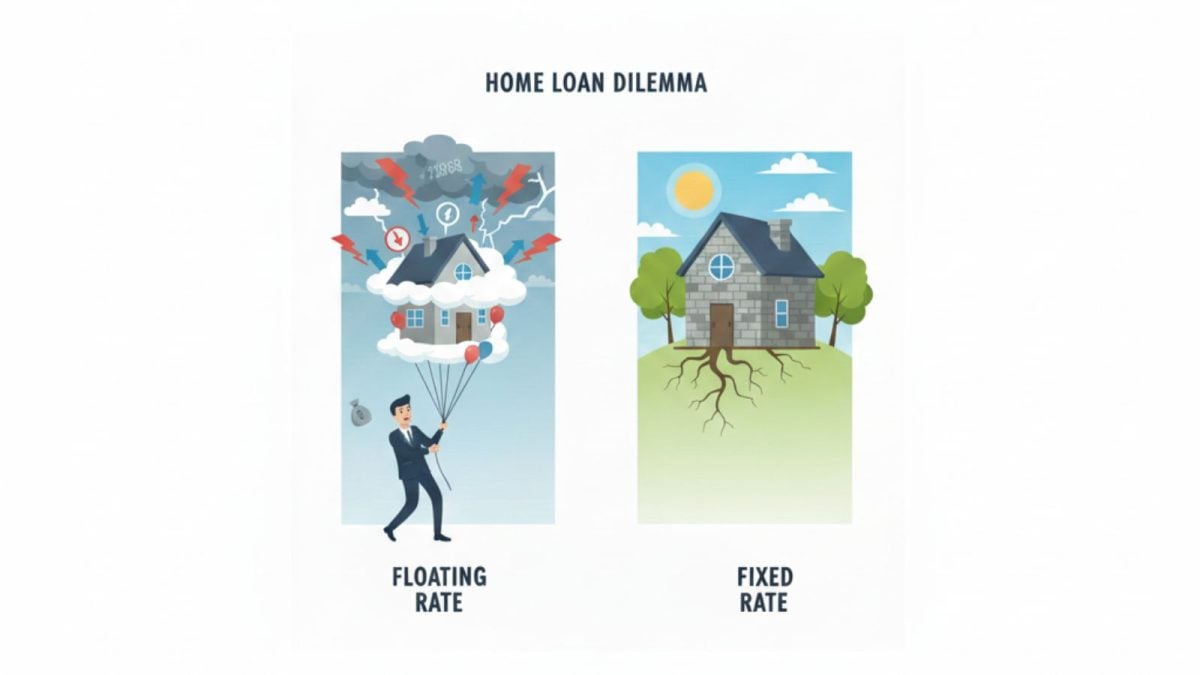
A fixed-rate home loan offers predictability. The interest rate remains unchanged for a defined period, ensuring that monthly EMIs stay constant regardless of market movements. This stability can be reassuring, especially for first-time buyers or salaried professionals with limited room for EMI fluctuations.
According to Anurag Goel, Director at Goel Ganga Developments, fixed-rate loans suit borrowers who value certainty over potential savings. “A fixed rate protects borrowers from economic ups and downs and ensures stress-free financial planning. It works well for long-term planners and first-time homebuyers who want stable outflows,” he said.
However, this comfort often comes at a cost. Fixed-rate loans typically carry slightly higher interest rates. In some cases, borrowers may also face penalties if they decide to switch to a floating rate before the fixed tenure ends.
Floating-rate loans, on the other hand, move in line with market benchmarks and the RBI’s policy stance. These loans generally start with lower interest rates, which can reduce EMIs in the early years. Borrowers also benefit when interest rates decline, making floating rates attractive during easing cycles.
Pradeep Kumar Jain, Chairman and Managing Director at Chintamani Finlease Ltd, said floating rates offer flexibility but require preparedness. “While EMIs can rise when rates harden, borrowers gain when rates soften. Floating-rate loans are better suited for those with stable incomes and a higher tolerance for short-term volatility,” he noted.
Experts advise borrowers to look beyond headline interest rates. Factors such as salary continuity, loan tenure, future income growth, and overall household expenses should guide the decision. Some borrowers also opt for hybrid loans, which start with fixed rates and later shift to floating, offering a middle path.
In the end, choosing between fixed and floating rates is less about predicting markets and more about understanding one’s own financial comfort. A well-informed decision today can go a long way in ensuring long-term financial stability.
 Click here to add News18 as your preferred news source on Google.
January 05, 2026, 18:01 IST
Read More


