- February 13, 2026
Who Is Hasnat Abdullah? Bangladesh Leader Who Threatened To ‘Cut Off Seven Sisters’ Wins Big
Last Updated:
Hasnat Abdullah secured over 1.6 lakh votes, defeating BNP-backed candidate A Jashim Uddin by a margin of 1.1 lakh votes.




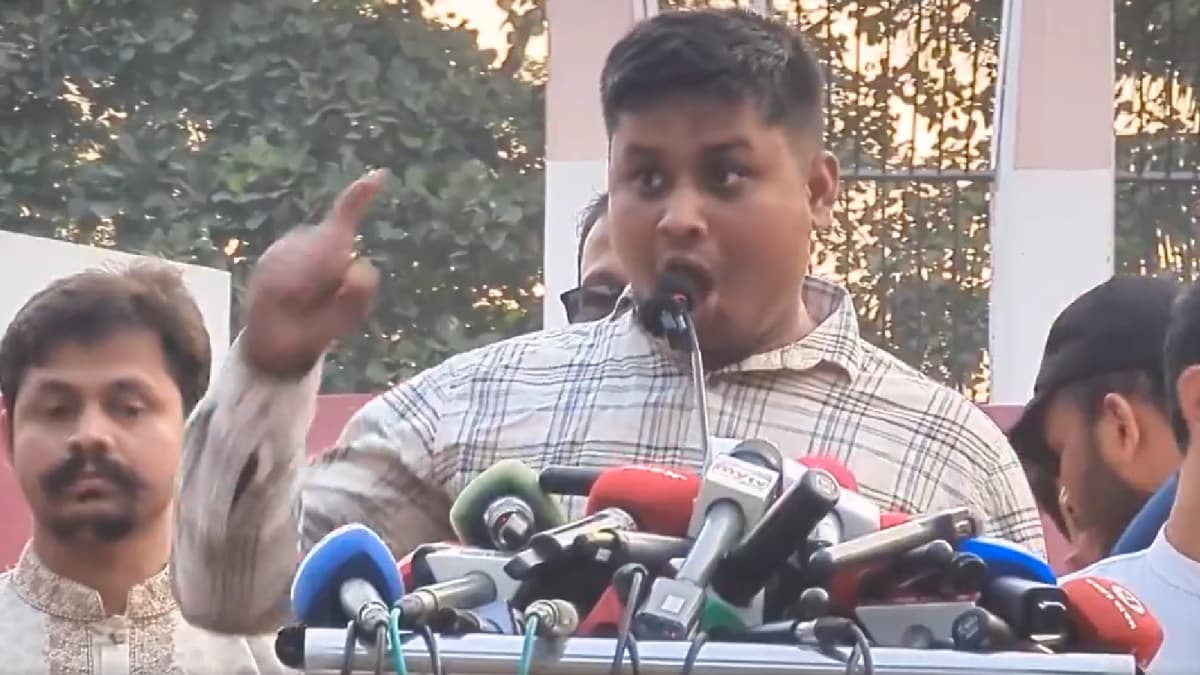
Speaking at a rally in Dhaka, Abdullah claimed Bangladesh would shelter separatist and anti-India forces targeting India’s Northeast. (IMAGE: X/@basherkella)
Bangladesh’s National Citizen Party (NCP) leader Hasnat Abdullah, who stirred a massive row by warning that Dhaka could shelter forces hostile to India, and help sever India’s seven northeastern states, has won the Comilla-4 parliamentary seat by a huge margin in the recently held elections.
As per news reports, Abdullah secured over 1.6 lakh votes, defeating BNP-backed candidate A Jashim Uddin by a margin of 1.1 lakh votes. Jashim Uddin had boycotted the election, alleging voting fraud.
The National Citizens Party (NCP) was formed by students who led the 2024 revolt against then Prime Minister Sheikh Hasina. The NCP participated in the elections as part of an 11-party alliance led by the Jamaat-e-Islami.
Who Is Hasnat Abdullah?
Hasnat Abdullah is a Bangladeshi activist-turned-politician and a former convener of the Students Against Discrimination, which led the anti-Hasina July Uprising in 2024. He came into limelight during and after the 2024 protests and serves as the party’s southern region chief organiser.
Abdullah initially spearheaded a protest against quotas in government jobs, but the campaign soon grew into a broader anti-Hasina movement. After weeks of unrest and violence, Hasina resigned and left the country in August 2024.
Following the fall of the Hasina government, students who had taken part in the protests formed the NCP in February 2025. Hasnat was later appointed as the party’s chief organiser for the southern region.
Abdullah’s Criticism Of India
In December 2025, Abdullah sparked controversy with an inflammatory statement against India. Abdullah had said Bangladesh could shelter forces hostile to India and allow separatist groups to use Bangladeshi soil.
“I want to make it clear to India that Bangladesh will respond if its sovereignty or rights are undermined,” he had said, adding, “If Bangladesh is destabilised, the fire of resistance will spread beyond its borders.”
“We will sever the seven sisters from India,” Abdullah had said, referring to India’s northeastern states of Tripura, Mizoram, Manipur, Meghalaya, Assam, Nagaland and Arunachal Pradesh. Of these, Tripura, Mizoram, Meghalaya and Assam share borders with Bangladesh.
India has long accused militant and separatist groups operating in the Northeast of using Bangladesh as a sanctuary, transit route and logistics base, particularly during the late 1990s and early 2000s. Several insurgent outfits from Assam and Tripura maintained camps, safe houses, or support networks across the border during this period.
Abdullah, who had earlier called for banning Isckon and called for the hanging of jailed Hindu monk Chinmoy Krishna Das Prabhu, also criticised PM Modi’s congratulatory post on Vijay Diwas in December 2024.
“This is Bangladesh’s Liberation War. The war was fought for Bangladesh’s independence from Pakistan. But Modi has claimed that it was solely India’s war and achievement. In doing so, they’ve completely ignored the existence of Bangladesh,” Abdullah had posted on Facebook.
Bangladesh Polls
The general election in Bangladesh- first since the political upheaval of July 2024 that ended former Prime Minister Sheikh Hasina’s long tenure and forced her to flee the country- has handed a decisive mandate to the Tarique Rahman-led BNP.
Tarique Rahman’s political comeback marks a dramatic turn in Bangladesh’s turbulent political landscape. Often described by critics as the “dark prince” of Bangladeshi politics, the 60-year-old leader hails from one of the country’s most influential political families. He is the son of former President Ziaur Rahman and former Prime Minister Khaleda Zia.
Dhaka, Bangladesh
February 13, 2026, 16:50 IST
Read More