


- May 8, 2026
Putin Spending Weeks In Bunkers Amid Coup, Drone Attack Concerns: Report
Last Updated:
The Russian president and his family are also no longer staying at their residences in the Moscow region or at the Valdai estate in northwestern Russia.




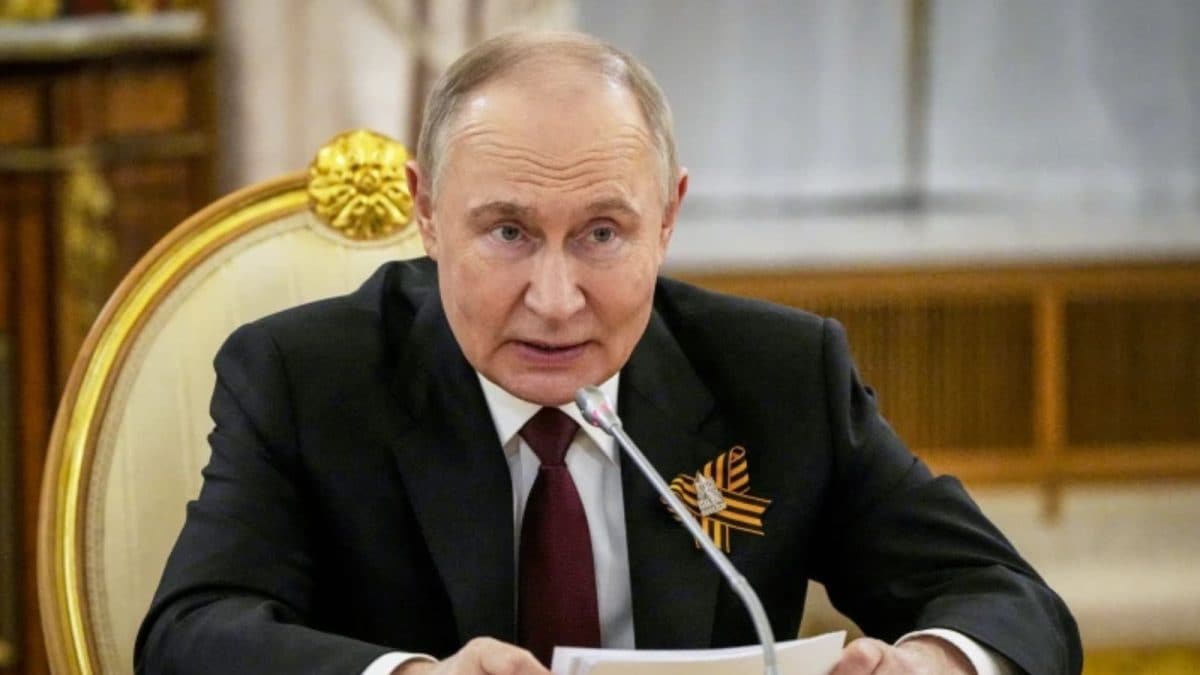
Russian President Vladimir Putin | File Image: AFP
Security arrangements for Russian President Vladimir Putin have been tightened considerably amid fears of a possible assassination attempt and growing concerns over his isolation during the Ukraine war, the Financial Times reported.
Russia’s Federal Protective Service (FSO) has stepped up protective measures in recent months. Sources familiar with Putin in Moscow and a person close to European intelligence told the newspaper that the Russian president is now spending long periods in underground bunkers while overseeing the war effort and has become increasingly detached from civilian governance.
According to the report, Putin’s isolation has deepened since the Covid-19 pandemic. By March, the Kremlin had reportedly become more concerned about the possibility of a coup attempt or drone strike.
“The shock of Ukraine’s drone Operation Spiderweb is still there,” a person familiar with Putin told the Financial Times.
The report said Ukrainian drones had targeted Russian airfields beyond the Arctic Circle last year. Another source familiar with the president said concerns were also heightened after the United States seized Venezuelan leader Nicolás Maduro in January.
The FSO has since intensified already strict security protocols. According to the European intelligence-linked source, Putin has sharply reduced his public visits, while security screenings for those meeting him have become more rigorous.
The Russian president and his family are also no longer staying at their residences in the Moscow region or at the Valdai estate in northwestern Russia. Instead, Putin is believed to be spending extended stretches in bunkers, including one located in the Krasnodar region in southern Russia, where he reportedly works for weeks at a time.
The Financial Times said Russian state media has relied on pre-recorded footage to preserve an appearance of normal routine.
Security restrictions have also expanded to individuals working closely with Putin. Staff members including cooks, photographers and bodyguards are reportedly barred from using public transport and cannot carry mobile phones or internet-enabled devices near him. Surveillance cameras have also reportedly been installed inside their homes.
People familiar with Putin told the newspaper that recent internet shutdowns in Moscow are partly linked to heightened security arrangements and efforts to defend against possible drone attacks.
European intelligence sources said FSO agents have expanded large-scale security sweeps, deploying dog squads and stationing forces along the Moscow river to counter potential drone threats.
The concerns reportedly extend to senior Russian officials as well. During a meeting late last year, security chiefs blamed one another for lapses connected to the killings of senior officers, including Lieutenant General Fanil Sarvarov, in attacks linked to Ukraine.
FSB chief Alexander Bortnikov reportedly criticised the defence ministry for not having a dedicated senior-protection unit, while National Guard head Viktor Zolotov cited a shortage of resources. Putin later directed the FSO to provide protection to ten generals, including three deputies, following Gerasimov.
Andrei Kolesnikov, a Moscow-based political analyst, told the Financial Times: “Putin is like the new Banksy sculpture in London [a man carrying a flag that covers his face], he does not want to see or hear. He listens only to the security services, which now run all spheres of life, and hopes that people will adapt to this as the new normal.”
The report also noted rising public frustration in Russia over internet shutdowns, taxes imposed on small businesses and livestock culls in Siberia. One of the most prominent critics has been Monaco-based lifestyle blogger Viktoria Bonya, whose 18-minute video appeal to Putin reportedly received more than 1.5 million likes and prompted a Kremlin response.
In the video, she said people were “afraid of him”. Putin later addressed the internet restrictions publicly and made a rare appearance in St Petersburg, where staged interactions were used to project accessibility.
Analysts cited by the Financial Times said Putin’s reduced public engagements point to tighter security measures, declining approval ratings and a widening disconnect between the Kremlin and public expectations.
Read More


