- June 12, 2026
‘Governor: The Silent Saviour’ movie review: Manoj Bajpayee struggles in a narrative vacuum

An economic thriller that utilises the textures of India’s Balance of Payments crisis of 1991 to deliver a message on state power, centralised authority, and the perceived liabilities of democratic noise, Governor: The Silent Saviour is yet another example of how history is being instrumentalised on screen today. It is not just looking back to understand the crippling economic impact of the Gulf War in 1991; it is looking back to legitimise the governance model of 2026.
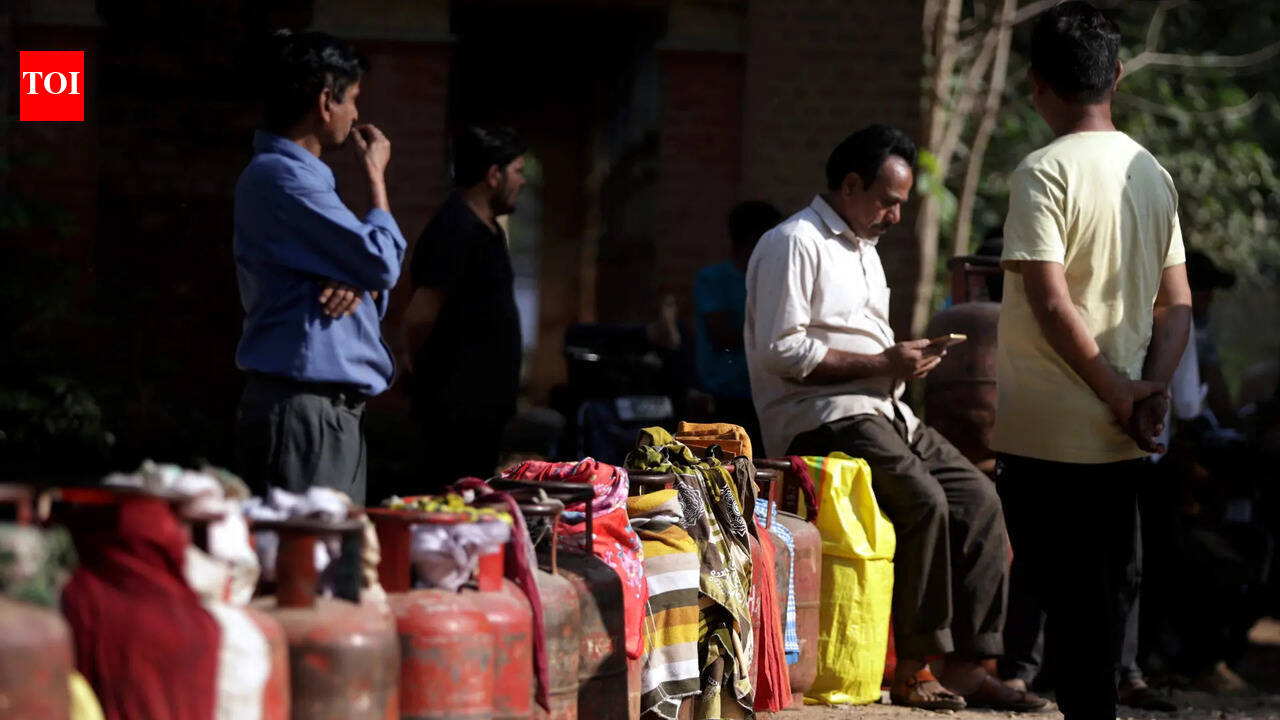
The timing of the film’s release feels remarkably prescient because India is once again navigating severe macroeconomic tremors triggered directly by a West Asian crisis, with petrol prices soaring, and rumours of depleting gold reserves floating in the air again.
‘Governor: The Silent Saviour’ (Hindi)
Director: Chinmay D Mandlekar
Cast: Manoj Bajpayee, Noshad Mohamed Kunju, Adah Sharma, Madhoo, Paritosh Sand
Duration: 122 minutes
Storyline: Set during the Balance of Payments crisis of 1991, the film follows RBI Governor A. Ramanan’s effort to prevent a national debt default by mortgaging gold reserves to secure loans.
Anchored by a restrained performance by Manoj Bajpayee as A. Ramanan, heavily based on former Reserve Bank of India Governor S. Venkitaramanan, the film, on the surface, attempts the rare cinematic feat of turning dry fiscal policy into a high-stakes commercial narrative. It looks beyond the typical uniform-wearing patriot guarding the nation’s physical borders to focus on patriotism that stems from within the system to honour the collective, quiet desk-bound bureaucrats, who worked relentlessly behind closed doors to draft the economic turnaround when the country was on the brink of bankruptcy.
Structured as a fictionalised but idealised tribute to Venkitaramanan, where the narrative positions him as a pragmatic realist who took India forward from the dying breath of Nehruvian socialism to free market highway, the movie makes the complex macroeconomic concepts accessible and emotionally engaging for a mainstream audience by bringing in common man and housewife logic and sentiments to make big-ticket decisions like mortgaging gold reserves to secure loans.
However, in the process, Governor falls squarely into the trap of reductionism, flattening a complex structural crisis into a simplistic, black-and-white melodrama, transforming a highly collaborative economic triumph into the legend of a single silent saviour. Of course, because of the rapid, chaotic changes in the Union Government, it fell entirely upon Venkitaramanan to act as a solitary crusader flying across the world to raise the resources that prevented an international default.
But, marginalising key figures like Manmohan Singh and Subramanian Swamy diminishes the role of Chandra Shekhar and Yashwant Sinha, and simplifying C. Rangarajan’s (Noshad Mohamed Kunju is efficient as the sounding board) contribution feels like a selective erasure to present Venkitaramanan as the sole author of the blueprint of reforms that changed the course of the Indian economy. One wonders if the “lone ranger”, as called by a prominent newspaper in a particular context, would have liked this cinematic liberty.
More importantly, right from the first sequence, the film captures a historic economic crisis through a modern, national security-style lens. It subtly yet distinctively builds a narrative that subordinates democratic dissent and freedom of speech to state survival. It portrays an inquisitive press, depicted by an unusually wide-eyed Adah Sharma, almost as a liability, and by comparing the Reserve Bank of India and the state to a suffering, silent mother, the film emotionally manipulates the audience into accepting secrecy.
When it paints the political executive of the 1990s as a fractured, loud, and incompetent democracy and contrasts the noise of politicians with the quiet resolve of a single bureaucrat, it feeds directly into the modern populist yearning for an all-powerful executive who can bypass traditional institutional checks, balances, and public debates to get the job done. In such a scenario, a personal punchline, ‘fathers never fail,’ sounds politically loaded.
In terms of storytelling, after a point, director Chinmay Mandlekar, who showed much promise with Bajpayee in Inspector Zende, loses trust in the procedural realism of the story and the inherent tension in the economic crisis and switches to the ticking-clock anxiety of the gold airlift, complete with dramatic music, sweeping shots of trucks moving in the dead of night, and airport runway standoffs. If it feels lazy, the production design with full stops at the end of newspaper headlines shatters the cinematic illusion.
By surrounding Bajpayee with intentionally thin, flat, and reactive supporting characters, Mandlekar leaves the audience with only one person to trust. Bajpayee effortlessly commands the screen, but a weak supporting cast ensures that no other character can challenge his narrative authority. There are no complex, layered debates or intellectual stalemates in the script. In this vacuum, even Bajpayee’s performance stops feeling organic and starts looking like an exhibition of acting.
Governor is currently running in theatres
Published – June 12, 2026 03:47 pm IST