- June 22, 2026
China Targets US Rare Earth Firms In Tit-For-Tat Move As Supply Chain Race Intensifies
Last Updated:
China adds ten US firms including USA Rare Earth, MP Materials and Aveox to its entities list, bars purchases from 46 US defense companies in tit for tat trade and security move




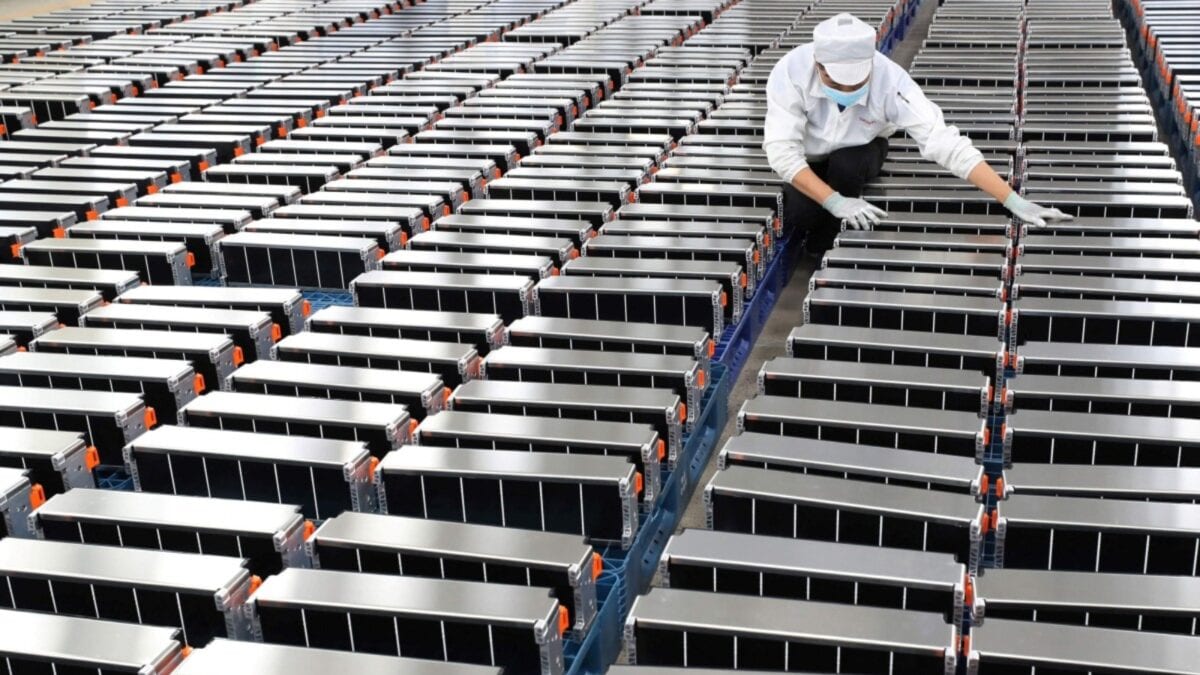
Congolese Cobalt in China, after being Smelted by Chinese Workers. Cobalt is a major element in the demand for EV Batteries. (Image Courtesy: AFP)
China has placed ten American companies on its restricted trade list, including two at the centre of Washington’s drive to build a rare earth supply chain independent of Beijing.
USA Rare Earth, MP Materials and high-tech motor manufacturer Aveox were among the firms added to China’s “entities list” on Monday, according to a statement from the commerce ministry in Beijing.
Separately, the finance ministry said Chinese companies were barred from purchasing products from 46 US defence companies.
Beijing said the move came in response to what it described as the “wrongful” addition of Chinese entities to Washington’s Chinese Military Companies List, and was taken to safeguard China’s “national security and interests.”
A Direct Shot At US Supply Chain Ambitions
The targeting of USA Rare Earth and MP Materials is pointed. Both companies sit at the core of American efforts to reduce dependence on Chinese-controlled rare earth supply chains, a vulnerability that Washington has treated with growing urgency since Beijing demonstrated its willingness to weaponise the sector.
That willingness was on clear display last year, when China imposed export controls on rare earths in response to Trump’s sweeping “liberation day” tariffs. The move shifted the balance of trade talks in Beijing’s favour and accelerated US efforts to build domestic alternatives.
An American executive based in China, who asked not to be named, described the latest measures as “measured and symbolic.”
US companies operating in sensitive sectors such as defence technology are already almost entirely shut out of Chinese government and military contracts, limiting the immediate commercial damage.
Tit-for-Tat, With A Longer Pattern Behind It
Beijing’s action came less than two weeks after the Pentagon reinstated Alibaba, Baidu and BYD to its blacklist of companies deemed to pose national security risks due to alleged ties with the People’s Liberation Army. All three Chinese companies denied having military connections.
The timing fits a pattern. According to a report published by the EU Chamber of Commerce in China in April, Beijing has nearly tripled its use of export controls over the past five years.
The researchers found that while some measures directly respond to western actions against China, Beijing has also used export controls to target trade choke points more broadly.
Diplomatic Channel Still Open
The escalation comes despite visible efforts from both sides to maintain dialogue. US President Donald Trump and Chinese President Xi Jinping met in Beijing last month, agreeing to work towards what they described as a “constructive relationship of strategic stability.” A further meeting is expected in September, ahead of the November expiry of a truce in their trade war.
The coexistence of diplomatic engagement and targeted economic restrictions has become a defining feature of the current phase in US-China relations. Both governments are pursuing security interests while managing the risk of broader commercial rupture.
The Fine Print Of Beijing’s Entities List
Chinese companies are legally barred from importing goods or technology from any entity on the list without special government approval. For American rare earth firms, the practical consequence is a formal severance from Chinese buyers at a time when the US is still in the early stages of building out processing capacity at home.
Rare earths are used in electric vehicles, wind turbines, defence systems and consumer electronics. China controls the dominant share of global mining and, more critically, processing.
Washington’s push to develop alternatives through companies like MP Materials and USA Rare Earth has been a central strand of industrial policy under both the Biden and Trump administrations.
The US embassy in Beijing did not respond to a request for comment request from the FT.
About the Author

Anoshito Banerjee is a digital journalist at CNN-News18, specialising in Indian foreign policy, global diplomacy, South and West Asian geopolitics, and strategic affairs. His reporting spans hard news…Read More
Read More