- June 17, 2026
Elangovan Perumal Talks About His Book “Your Experience Is Not an Asset”

About the Author:
Over nearly two decades inside global technology and consulting organizations, I have occupied most of the roles this book describes. I began as a junior engineer in India. I moved through delivery and project management, spent six years working with large enterprise clients in the United States, and eventually led global programs spanning four continents. I have sat in rooms where decisions were made and in rooms where they were only executed. I have experienced the difference from both sides. At IBM, where I led delivery across global programs spanning India, the United States, and multiple geographies, something began to shift my thinking. Alongside my delivery responsibilities, I started coaching and mentoring professionals internally — initially through a structured organizational initiative, and eventually because people sought the conversations directly. Over time, that work expanded to include managers and team leads across geographies. The conversations that began as formal coaching sessions became something more structural: a repeated observation that capable professionals were accumulating work without converting it into leverage. By the time I moved on from IBM, that pattern had been confirmed across close to one hundred individual conversations. The same structure surfaced everywhere. Different industries, different roles, different decades of experience. Identical mechanism. I hold a Post Graduate qualification in Strategic Management from the Indian Institute of Management Kozhikode, an MBA, and professional certifications in project management, and life and career coaching. But none of those credentials generated the insight behind this book. The insight came from watching a very specific failure repeat itself across very different circumstances, and eventually asking why.
Exclusive interview with the author
Q: What Inspired You To Write This Book?
A: Not a single moment. A pattern. Over nearly two decades, I watched capable professionals — people who had worked hard, delivered consistently, and done everything right — struggle to move forward in ways their experience should have made easy. The same structure kept appearing across different industries, roles, and decades of experience. This book is my attempt to name that structure clearly enough that others can see it before it costs them.
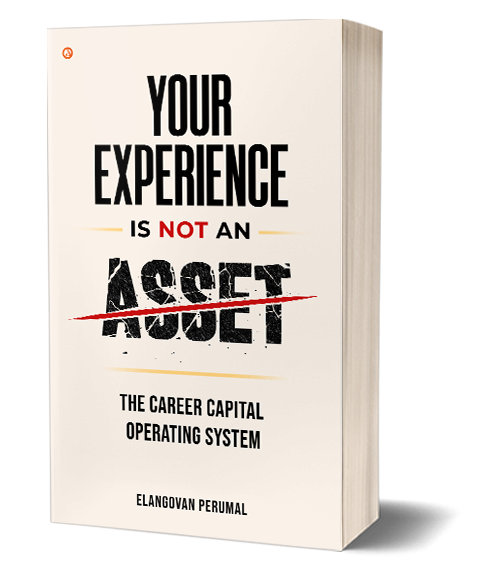
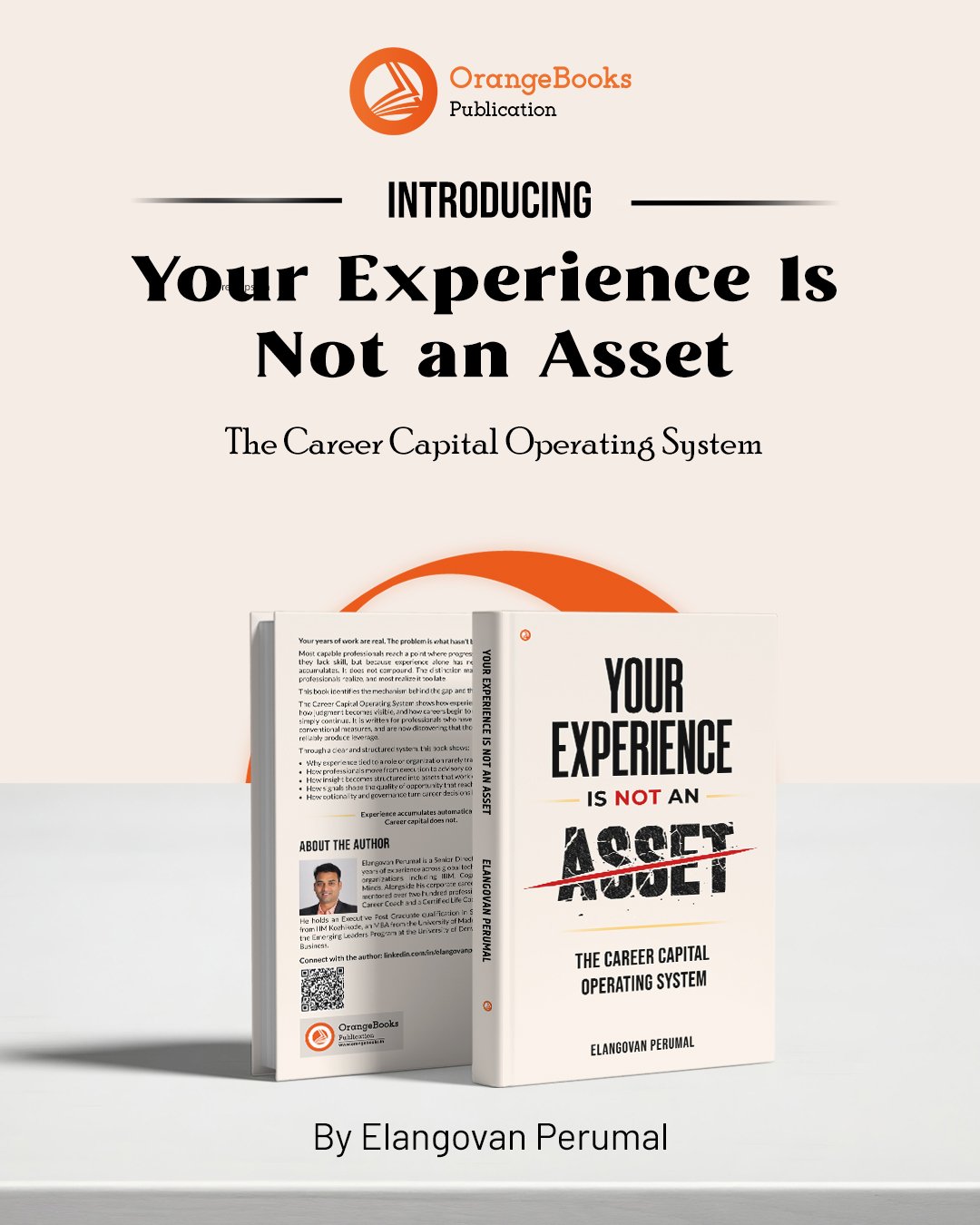
Q: Can You Tell Us About The Book?
A: It makes one central argument: experience, by itself, is not an asset. It becomes one only when it is converted into judgment, structured into frameworks, and made visible through consistent signals. The book introduces the Career Capital Operating System — a six-layer framework covering Identity, Experience, Assets, Signals, Optionality, and Governance — and explains how careers compound when these elements work together, and why they stall when they do not.
Q: What Does The Title Mean?
A: It is meant to stop the reader mid-assumption. Most professionals have been told, directly or indirectly, that their experience is their greatest asset. The title challenges that directly. Experience that has not been converted into portable judgment, clear signals, and deliberate positioning is not an asset — it is memory. The title names the problem the entire book then addresses.
Q: Where Do You Get Your Information Or Ideas For Your Books?
A: Almost entirely from observation. Close to two hundred coaching and career conversations across IBM, Cognizant, Happiest Minds, and beyond. Real career inflection points, not case studies from journals. The ideas were tested in actual conversations with actual professionals before a single chapter was written. The frameworks in this book describe how careers actually behave — not how career theory suggests they should.
Q: What Does Success Mean To You? What Is The Definition Of Success?
A: For this book, success is precise: a senior professional reads it, recognizes themselves in it, and makes one decision differently because of it. Not a dramatic reinvention. One decision — about what to accept, what to decline, or how to articulate their value — made with more clarity than before. If the book produces that, repeatedly, across enough people, it has done its job.


Q: Tell Us About Your First Published Book? What Was The Journey Like?
A: This is my first book, and the honest answer is that it did not begin as a writing project. It began as a pattern I could not stop noticing. The writing itself was the least difficult part. The harder work was being precise enough — making sure every chapter earned its place and that nothing was included simply because it sounded useful. The framework had to survive contact with real careers, not just internal logic. That standard slowed the process and improved the outcome.
This book is published by OrangeBooks Publication. All rights are reserved with the author & the publisher.