- October 13, 2026
‘More Than Just Repositories Of Information’: Jaishankar’s Call To Protect India’s Cultural Heritage
Last Updated:
Jaishankar stressed the need to protect India’s manuscripts, saying they showed how societies thought and how knowledge has been transmitted through the ages.




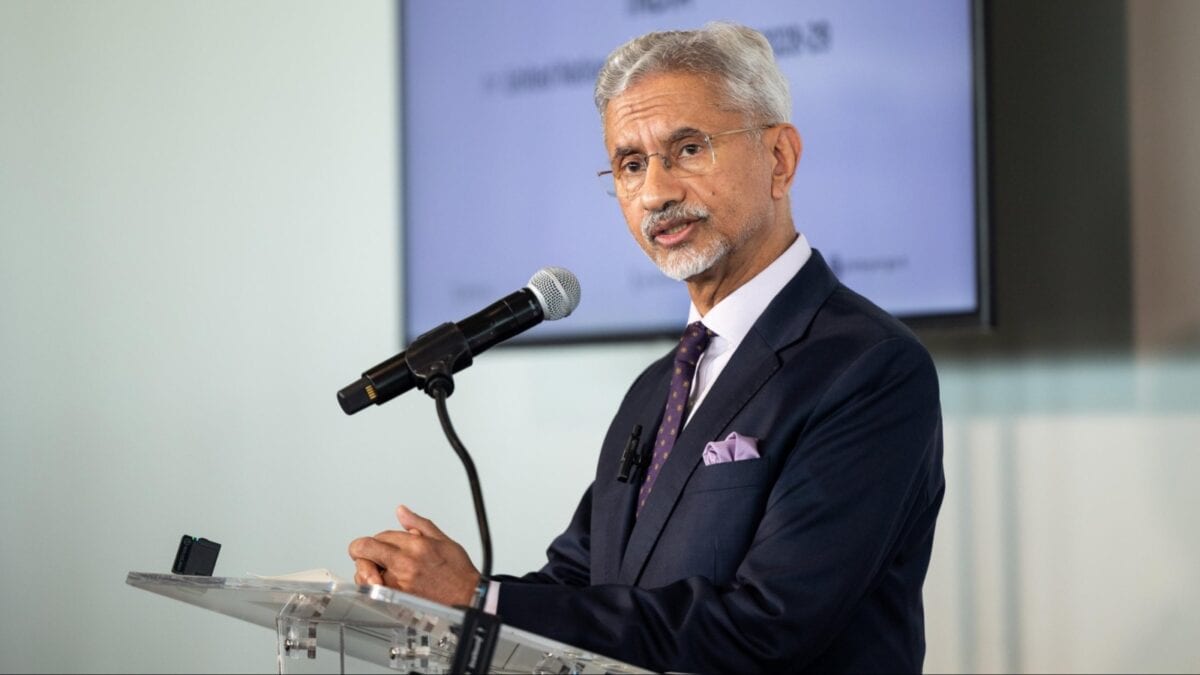
External Affairs Minister S Jaishankar. (PTI/File)
External Affairs Minister S Jaishankar on Monday called for protection and preservation of ancient Indian manuscripts, arguing that they were more than just repositories of information and were a symbol of the country’s cultural memory. He also stressed that civilisations preserve their distinctiveness by engaging with others.
Speaking at an event on Asian texts and practices at Delhi’s India International Centre (IIC), Jaishankar said the relationship between traditional knowledge and the preservation of cultural memory needed more attention, particularly focusing on manuscripts.
“Manuscripts are more than just repositories of information. They record how societies thought, how they experimented, how they organised their thought processes, their institutions, and of course, how they transmitted it to the further generations. In human history, obviously, that transmission process, how knowledge survives and is passed on, has always, at one level, it has always happened,” he said.
#WATCH | At the exhibition “Nirāmayatā: Healing and Wellbeing in South Asian Texts and Practices” at the India International Centre (IIC), India’s External Affairs Minister, Dr. S. Jaishankar, says, “The relationship between traditional knowledge and the preservation of cultural memory, I believe, also deserves attention because manuscripts are more than just repositories of information. They record how societies thought, how they experimented, how they organized their thought processes, their institutions, and of course, how they transmitted it to the further generations. In human history, obviously, that transmission process, how knowledge survives and is passed on, has always, at one level, it has always happened. At the same time, it has always been a bit of a challenge because knowledge, in many ways, also has a fragility. It is discontinuous; historical disruptions are there, but there is also literally the fragile side of manuscripts when we think about it. Languages, scripts, knowledge, and understanding sometimes erode with time; they become less familiar, and traditions of interpretation weaken. Sometimes entire bodies of knowledge are at risk, and that is why today the preservation, protection, and access to manuscripts really have such value.”
(Source: MEA/Youtube)
— ANI (@ANI) October 13, 2026

However, Jaishankar also emphasised that knowledge remains vulnerable to historical disruptions, noting that the gradual erosion of languages and scripts and the weakening of interpretative traditions can threaten entire bodies of knowledge.
“That is why today the preservation, protection, and access to manuscripts really have such value,” he said.
‘Civilisations Preserve Distinctiveness By Engaging’
Jaishankar further stressed that civilisations perceive and preserve their distinctiveness not by remaining sealed off but by “engaging from a position of confidence”.
Highlighting the history of healing and wellness in the subcontinent, Jaishankar said traditional knowledge developed through observation, reflection and practice, encompassing Vedic hymns, Buddhist monastic traditions and specialised texts on surgery, pharmacology and therapeutics.
Highlighting the role of cultural exchanges, he said medical knowledge spread through pilgrimage routes and trade networks. At the same time, Sanskrit texts were translated into various languages and practitioners developed new techniques, medicinal substances and pharmaceutical practices.
“The task before us is to preserve these materials but equally to make them meaningful to contemporary audiences, and that is best done through a process of access and awareness and display,” he said, while suggesting that artificial intelligence had the potential to preserve manuscripts and improving access to them.
He also praised the role of the Samhita Initiative in preserving, documenting and making accessible the manuscript traditions of the Indian subcontinent.
(with agency inputs)
Quick Answers
 Ask News18
External Affairs Minister S Jaishankar stated that ancient manuscripts are much more than mere information repositories, serving instead as symbols of India’s cultural memory that record how societies thought, experimented, and transmitted knowledge.
Ask News18About the Author

Aveek Banerjee is a Senior Sub Editor at News18. Based in Noida with a Master’s in Global Studies, Aveek has more than three years of experience in digital media and news curation, specialising in int…Read More
October 13, 2026, 07:14 IST
Read More