- July 23, 2026
Same-Sex Couples And Income Tax: How A Gold Bracelet Has Sparked A Big Legal Battle In India
Last Updated:
A petition in Kanataka High Court asks whether same-sex couples should receive the same tax exemption on gifts that is currently available to legally married couples.




The dispute arose after Godi gifted Kalia a 22-carat gold bracelet, inherited from his father and valued at around Rs 1.15 lakh.
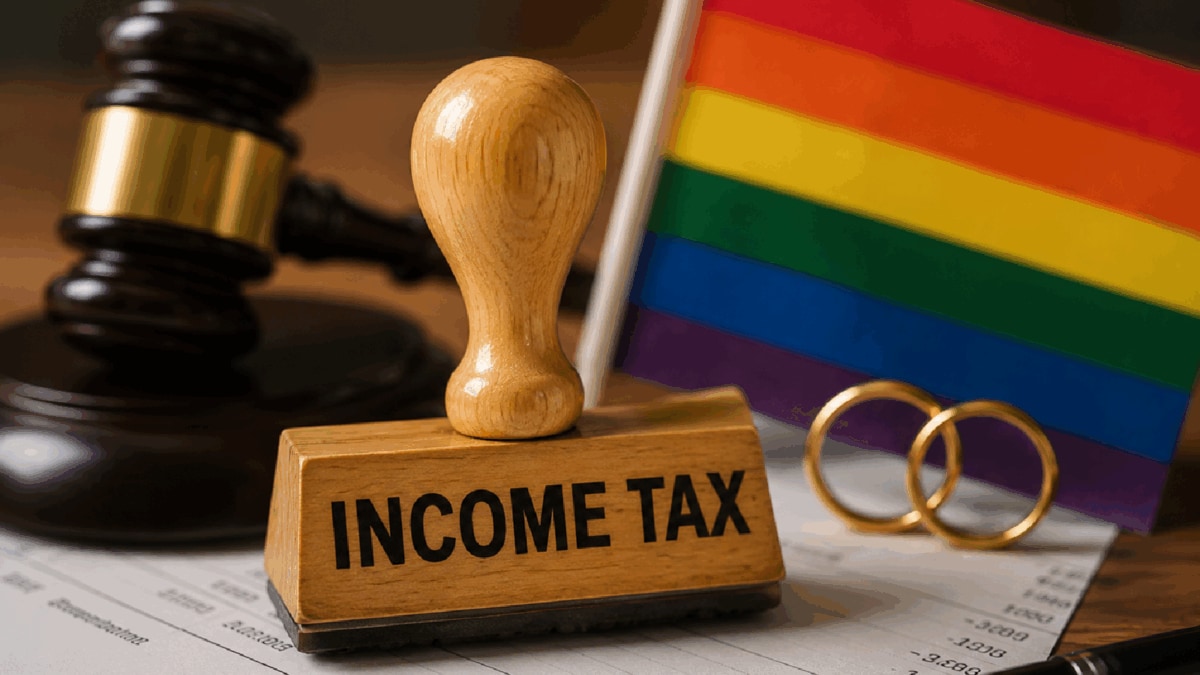
A gold bracelet worth around Rs 1.15 lakh has triggered a legal battle that could have far-reaching implications for LGBTQ+ rights and India’s tax laws. The case before the Karnataka High Court is not about income tax rates or filing returns. The petition asks whether same-sex couples should receive the same tax exemption on gifts that is currently available to legally married couples.
The issue came to light after a Bengaluru-based same-sex couple challenged the Income Tax Act, arguing that they were required to pay tax on a gift (gold bracelet) exchanged between them simply because their relationship is not legally recognised under Indian law. Here’s what the case is about and why it matters.
What triggered the dispute?
The petition was filed by Bengaluru-based couple Anurag Kalia and Akhilesh Godi. According to The Indian Express, the dispute arose after Godi gifted Kalia a 22-carat gold bracelet, inherited from his father and valued at around Rs 1.15 lakh. While filing his income tax return, Kalia was advised to declare the bracelet as income because the gift exceeded the tax-free limit and did not qualify for the exemption available to gifts received from a “relative”.
The couple has now challenged this provision before the Karnataka High Court.
What does the Income Tax Act say?
Under Section 56(2)(x) of the Income Tax Act, gifts received without consideration — that is, without paying anything in return — may be taxed if their value exceeds Rs 50,000 in a financial year.
However, the law provides several exceptions. One of the most important is for gifts received from a “relative”. The definition of relative includes a person’s spouse, parents, siblings, children and certain other family members. As a result, gifts exchanged between legally married spouses are generally not taxed, irrespective of their value.
Why is this an issue for same-sex couples?
The problem lies in the legal recognition of marriage. India currently does not recognise same-sex marriages. Since the Income Tax Act extends the exemption to gifts received from a legally recognised spouse, same-sex partners do not fall within that definition.
This means that a gift which would be tax-free if exchanged between a husband and wife may become taxable when exchanged between two same-sex partners.
What are the petitioners arguing?
The petitioners contend that this amounts to unequal treatment under the Constitution. According to The Indian Express, they have asked the High Court to either interpret the word “spouse” in a gender-neutral manner or read down the provision so that the exemption also applies to same-sex couples.
Their argument is that the law effectively penalises them because their relationship lacks legal recognition, even though the Supreme Court has recognised the rights and dignity of LGBTQ+ persons.
What has the Centre told the High Court?
The Union government has opposed the plea. According to The Indian Express, the Centre argued that the exemption is “based on marriage or relation” and not on a person’s sexual orientation.
According to the report, Additional Solicitor General Aravind Kamath argued, “The relatives are not classified on the basis of sex… as wrongly misunderstood by the petitioners.”
It submitted that tax exemptions are linked to legally recognised and verifiable relationships under existing law.
“It is based on a legally verifiable family relationship called marriage for which the parliament has separate law and direct family status like – a sibling, so that if there is a dispute of a particular transfer of property, it can be verified by the authority with least intrusion into the status of the relative,” Kamath said.
Why is the case significant?
The case is not about legalising same-sex marriage. Instead, it deals with whether tax benefits linked to marriage should also be available to same-sex couples. The outcome could have implications beyond this particular dispute. If the court accepts the petitioners’ arguments, it could affect how tax laws are interpreted wherever benefits depend on marital status. If it upholds the current provision, any change may have to come through Parliament.
Yes, a ruling on gift tax exemptions for same-sex couples could impact other marriage-linked benefits.
About the Author

Haris is Deputy News Editor (Business) at news18.com. He writes on various issues related to personal finance, markets, economy and companies. Having over a decade of experience in financial journalis…Read More
Read More