- August 11, 2026
Capital Cost: Delhi Is Losing Its Economic Share—And Its Neighbours Are Gaining
Last Updated:
A Comptroller and Auditor General (CAG) report tabled in Delhi Assembly by Chief Minister Rekha Gupta highlighted an overall declining trend in Delhi’s contribution to India’s GDP




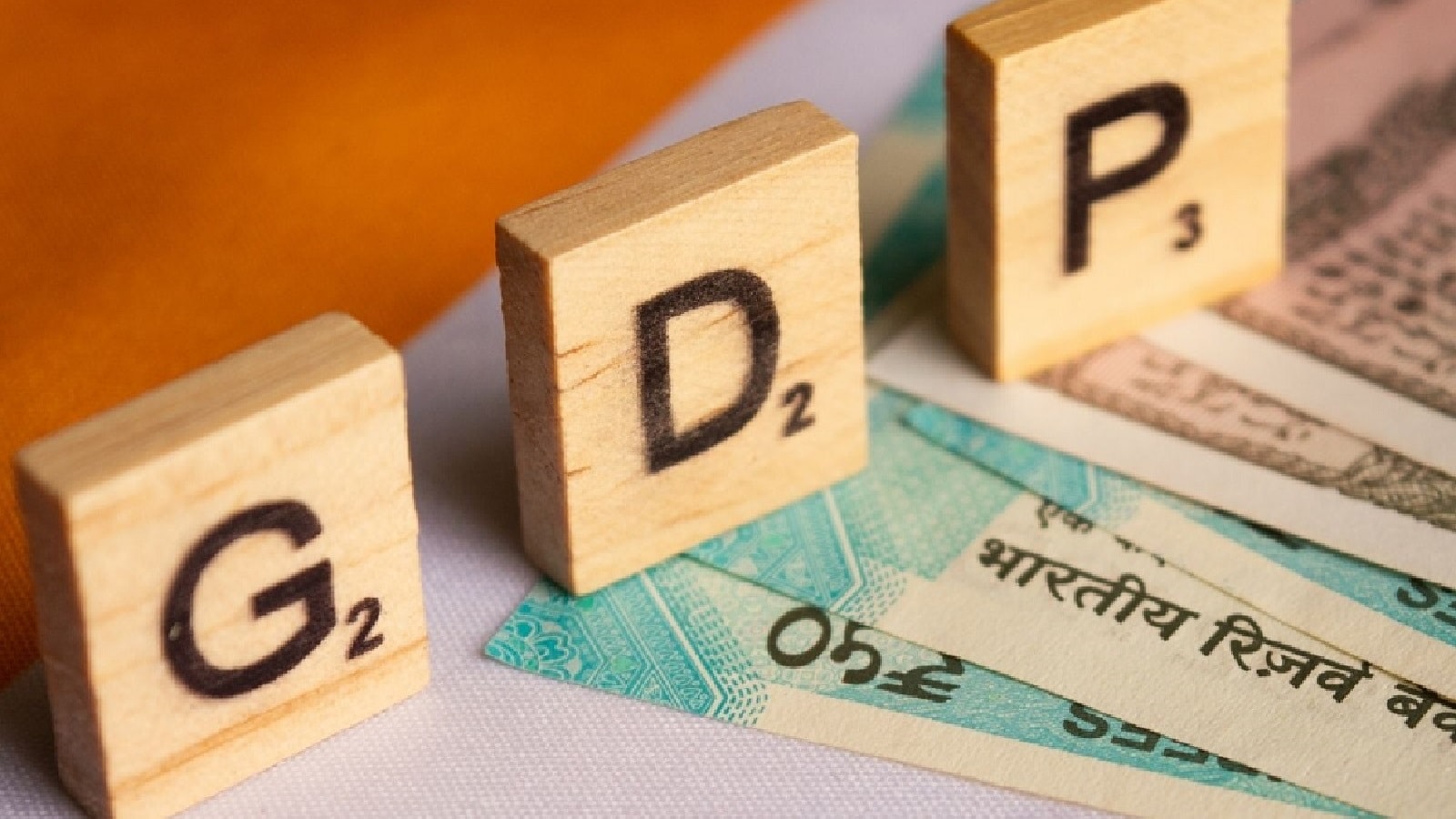
The numbers suggest that Delhi’s relative decline is not necessarily a story of the NCR becoming weaker. Instead, economic activity appears to be spreading beyond the capital’s administrative boundaries. Representational image
Delhi remains one of India’s richest and most important urban economies, but its share of the national GDP has been steadily slipping. The capital accounted for 3.82% of India’s GDP in FY2023-24, down from 4.12% in FY2017-18—a decline of 0.30 percentage points in six years.
A Comptroller and Auditor General (CAG) report tabled in the Delhi Assembly by Chief Minister Rekha Gupta highlighted an overall declining trend in Delhi’s contribution to the national GDP.
The shift is particularly striking because neighbouring cities in the National Capital Region (NCR) have been gaining ground. Noida’s share increased from 0.84% to 0.87% over the same period, while Ghaziabad’s rose sharply from 0.24% to 0.39%.
The numbers suggest that Delhi’s relative decline is not necessarily a story of the NCR becoming weaker. Instead, economic activity appears to be spreading beyond the capital’s administrative boundaries.
Ghaziabad’s rise stands out
Among the neighbouring centres, Ghaziabad has recorded the more notable change. Its contribution to India’s GDP increased by 0.15 percentage points between FY18 and FY24, compared with a 0.03-point rise for Noida.
That growth reflects a broader transformation across the NCR, where manufacturing, logistics, real estate, technology, and services have increasingly expanded into satellite cities.
Noida and Greater Noida, in particular, have benefited from improved connectivity, industrial development, and their proximity to Delhi. The area has also emerged as an important destination for technology companies, electronics manufacturing, and other businesses seeking larger commercial and industrial spaces.
Why businesses are moving outward
Rising costs and regulatory pressures in Delhi are among the factors that may be encouraging businesses to look towards the capital’s periphery.
Commercial rents and land constraints can make expansion increasingly expensive inside Delhi. Pollution-control requirements have also affected manufacturing activity, pushing some industrial operations towards locations outside the capital.
The result is a changing economic geography: businesses may remain closely connected to Delhi while generating output, employment, and investment elsewhere in the NCR.
Delhi’s challenge is relative, not absolute
Delhi’s economy is still expanding. Its gross state domestic product at current prices reached about Rs 12.15 lakh crore in FY2024-25, while services continue to dominate the economy.
The more important concern is that the national economy has been growing faster. A falling share of national GDP, therefore, does not mean Delhi is shrinking in absolute terms; it means other parts of India are expanding more rapidly.
That distinction matters. Bengaluru, for example, increased its national GDP share from 2.88% in FY18 to 3.23% in FY24, while Mumbai and Chennai also recorded gains.
The NCR may be entering a new phase
The emerging picture is less about Delhi versus Noida or Ghaziabad and more about the evolution of the NCR into a multi-centre economic region.
Delhi still provides the region with its enormous consumer base, institutions, financial ecosystem, and global connectivity. But surrounding cities are increasingly developing economic identities of their own.
If this trend continues, the NCR’s future growth may depend less on the dominance of one capital city and more on how effectively Delhi, Noida, Ghaziabad, Gurugram, and other urban centres function as an integrated economic corridor.
For Delhi, the message is clear: retaining its economic lead will require more than its status as the national capital. It will depend on competitiveness, infrastructure, investment, and the ability to create room for new businesses to grow.
About the Author

Pathikrit Sen Gupta is a Senior Associate Editor with News18.com and likes to cut a long story short. He writes sporadically on Politics, Sports, Global Affairs, Space, Entertainment, And Food. He tra…Read More
August 11, 2026, 22:24 IST
Read More