- August 15, 2026
‘The $200 Trillion Heist’: On Independence Day, Recalculating How Britain Drained 27% Of World GDP From India
Last Updated:
Understanding the mechanics of this historical wealth transfer exposes how one of the world’s richest empires was systematically impoverished over 190 years




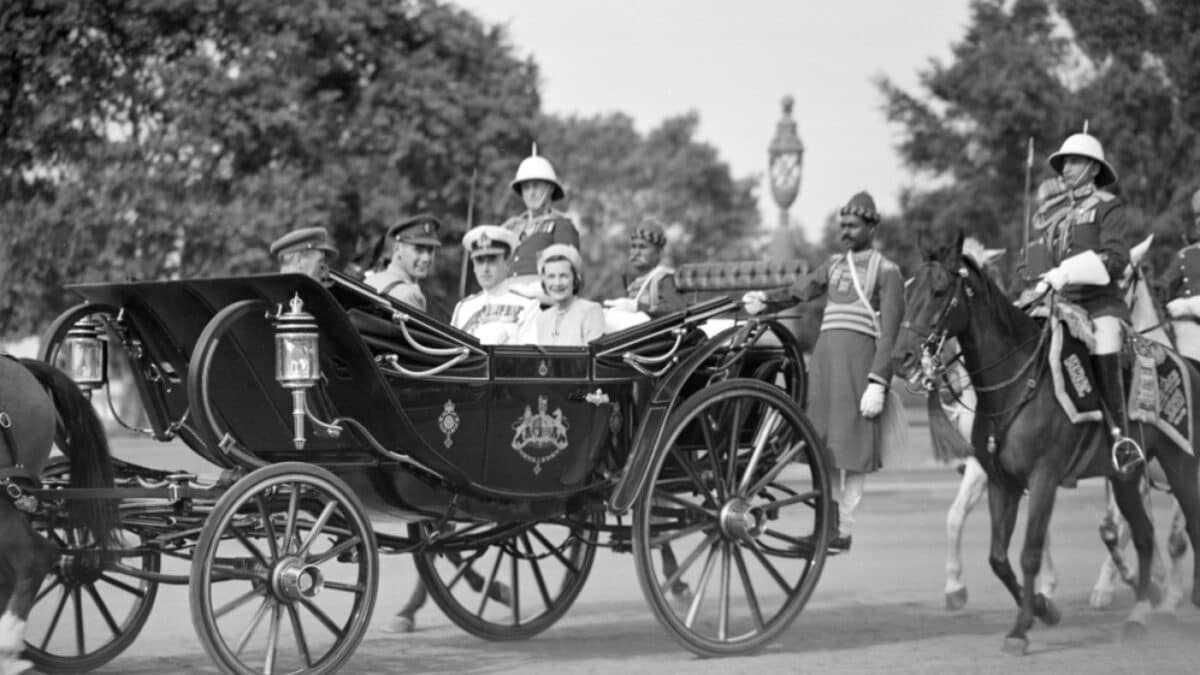
Lord Louis Mountbatten, the last Viceroy of India, and his wife, Lady Edwina Mountbatten, ride in the state carriage towards the Viceregal lodge in New Delhi, on March 22, 1947. (File image: AP)
When India gained independence in 1947, it inherited an economy devastated by nearly two centuries of colonial exploitation. Historical calculations by prominent economists famously estimated that the British Crown and the East India Company siphoned out approximately $45 trillion between 1765 and 1938.
However, updating these figures to reflect modern compound interest, global market inflation, and contemporary valuations pushes that figure closer to an astonishing $200 trillion in 2026 value.
Understanding the mechanics of this historical wealth transfer exposes how one of the world’s richest empires was systematically impoverished over 190 years.
The Council Bills Mechanism: Taxing India to Buy Its Goods
The primary vehicle for this massive economic transfer was a deceptive financial arrangement known as the “Council Bills” system.
Before 1765, the East India Company paid for Indian goods—such as textiles, spices, and saltpetre—using bullion imported from Britain. After gaining tax collection rights in Bengal, the Company altered its operations:
- Taxing the Population: Local revenues were collected directly from Indian peasants and merchants.
- Buying Goods with Tax Money: The British state used roughly a third of these collected tax revenues to purchase Indian goods for export.
- Zero Real Payment: Indian producers were effectively paid with their own tax money, allowing Britain to acquire valuable exports for free.
Rather than benefiting local producers, the proceeds from re-exporting these goods into global markets flowed directly to London, funding Britain’s Industrial Revolution and building its international infrastructure.
From 27% to 3%: The Catastrophic De-Industrialisation
The structural impact of colonial trade policies altered India’s position in global commerce:
- Global Share Collapse: In 1700, India generated roughly 27 per cent of global GDP. By the time the British departed in 1947, that share had plummeted to under 3 per cent.
- Destruction of Textiles: High tariffs were slapped on Indian textile imports entering Britain, while British manufactured goods entered India tariff-free. This decimated historic manufacturing hubs like Dhaka, Murshidabad, and Surat.
- Forced Agrarian Economy: Millions of displaced artisans were forced into subsistence farming, turning a self-sustaining industrial nation into a mere supplier of raw agricultural materials like cotton, opium, and indigo.
Home Charges and Military Operations Abroad
Even after the British Crown assumed direct administration in 1858, the drain continued under the guise of “Home Charges”.
Indian taxpayers were forced to fund the pensions of retired British civil servants, pay interest on British-owned railway investments, and finance military campaigns fought by the British Indian Army across Africa, the Middle East, and Asia.
During World War II alone, India’s war contribution and forced loans resulted in massive domestic inflation and tragic famines, leaving the country financially exhausted at the dawn of freedom.
Rebuilding a Modern Economic Power
The $200 trillion calculation represents more than lost currency; it accounts for generations of stalled domestic capital accumulation, suppressed industrialisation, and neglected public infrastructure.
Following independence in 1947, Jawaharlal Nehru’s government faced immense structural challenges as it attempted to rebuild a country economically depleted by nearly two centuries of colonial extraction.
The immediate drain of resources left the new administration with severe capital scarcity, forcing it to manage widespread poverty, frequent food shortages, and a decimated domestic industrial base while simultaneously integrating millions of refugees and funding vital public infrastructure from a severely depleted national treasury.
Decades after independence, India has transformed its economic trajectory. Having surpassed its former colonial ruler to become one of the world’s largest economies, the nation continues its push towards long-term development targets, reclaiming the global economic standing it held centuries ago.
Key Questions Answered
 Ask News18
In 1700, India generated approximately 27% of the global GDP.
Ask News18About the Author

Pathikrit Sen Gupta is a Senior Associate Editor with News18.com and likes to cut a long story short. He writes sporadically on Politics, Sports, Global Affairs, Space, Entertainment, And Food. He tra…Read More
August 15, 2026, 19:51 IST
Read More