- August 2, 2026
Trump’s Closest Gulf Allies Are Frustrated With His Iran War Strategy: What Does This Mean
Last Updated:
Gulf allies have asked United States for additional air-defence interceptors and assurances that the US military would continue protecting them if the conflict continues.




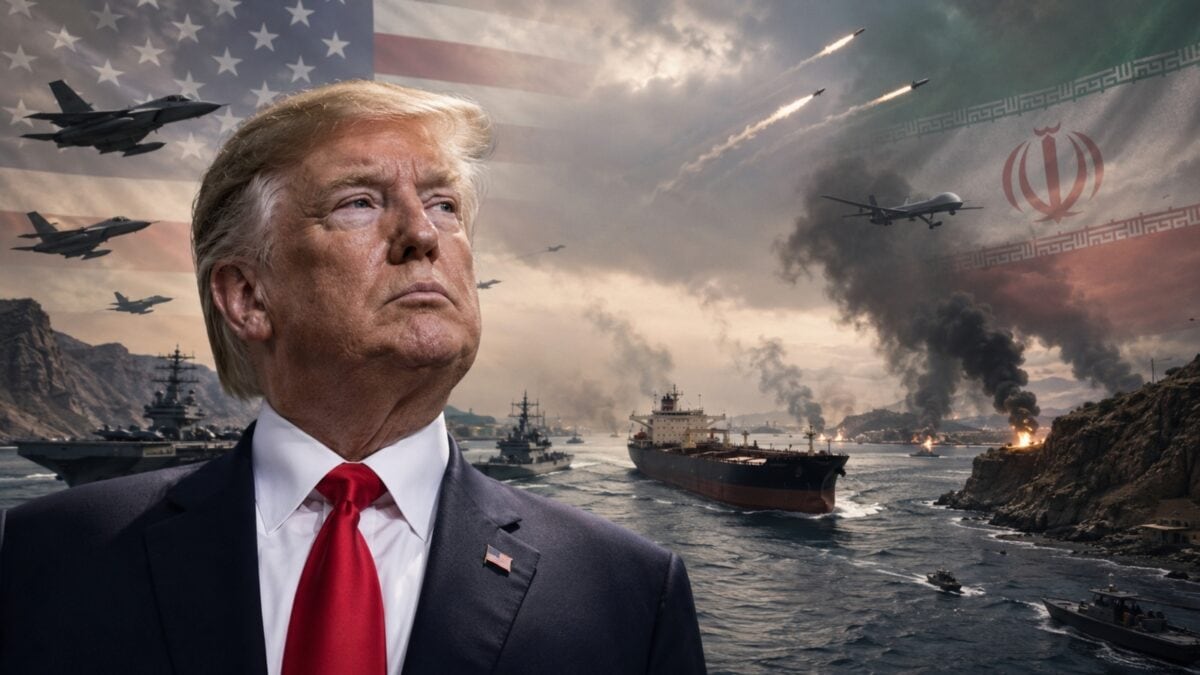
Trump’s Iran Strategy Faces Pushback From America’s Closest Arab Allies. (AI-Generated Image)
Gulf countries have grown increasingly frustrated with what they see as the lack of a clear US strategy as the conflict with Iran continues, according to a Wall Street Journal report. The report said the prolonged fighting has exposed Gulf states to repeated Iranian attacks while raising concerns over regional security.
According to the report, Gulf allies have also asked the United States in recent weeks for additional air-defence interceptors and assurances that the US military would continue protecting them if the conflict continues.
Trump pauses planned strikes
US President Donald Trump had announced plans on Friday for fresh strikes against Iran. However, he later decided to hold off on the attack after mediators made progress on a proposal to reopen the Strait of Hormuz and several Gulf countries urged him to continue dialogue with Tehran, people familiar with the matter told the Wall Street Journal.
Trump’s social media announcement early Sunday, Middle East time, temporarily eased tensions between Washington and Tehran.
The report said Trump’s decision reflected a familiar pattern in which he alternates between strong military warnings and optimism about the possibility of a peace agreement.
Diplomatic efforts continue
Regional mediators have been working to secure another ceasefire between the United States and Iran.
According to the report, Qatari mediators presented Iran with a fresh proposal on Saturday aimed at reopening the Strait of Hormuz. Iranian diplomats reportedly responded positively, raising hopes of a possible compromise.
An Iranian diplomat confirmed that Tehran had shown openness to the proposal, although it remained unclear whether Iran would ultimately accept it.
The proposal reportedly suggests new shipping routes through the Strait of Hormuz, which lies between Iran and Oman and carries around 20 per cent of the world’s oil trade.
The report said it remains unclear how the proposal addresses Iran’s demand to collect fees from ships passing through the waterway, something strongly opposed by the United States.
Iranian diplomats also presented fresh proposals on Friday regarding reopening the Strait and easing sanctions on Iranian oil exports, regional officials were quoted as saying.
Saudi Arabia urges restraint
Shortly before Trump’s announcement, Saudi Crown Prince Mohammed bin Salman spoke with the US President and urged dialogue to reduce regional tensions, according to Saudi state media and Saudi officials.
The Saudi government said such diplomatic efforts could preserve regional security and prevent a wider conflict.
The report added that the Crown Prince also sought clarity on Washington’s strategy towards Iran and the proposed strikes. Behind the scenes, Gulf countries are said to be frustrated by what they view as the absence of a clear US approach while continuing to face Iranian attacks.
Different views within the Gulf
Not all Gulf countries share the same position. According to senior Gulf officials, the United Arab Emirates has encouraged Trump in recent days to take stronger action against Iran. The officials argued that Iran’s Islamic Revolutionary Guard Corps would not compromise unless the United States escalated military pressure, took control of the Strait of Hormuz and possibly considered ground operations.
Saudi Arabia, however, has consistently favoured de-escalation. The kingdom had previously opposed a US military effort to reopen the Strait of Hormuz, leading to tensions between Washington and Riyadh before Saudi Arabia eventually backed down.
According to the report, Israeli officials now believe Trump prefers reaching a deal rather than returning to a full-scale war, which would impose heavy costs across the Middle East.
Polling cited in the report also suggested the Iran war has become unpopular in the United States and could affect Republican prospects in the November midterm elections.
The report further said Iranian officials are aware of Trump’s political vulnerability and could seek to exploit it if diplomacy fails. An Iranian diplomat said the Islamic Revolutionary Guard Corps was considering pre-emptive strikes even if the United States did not launch an attack.
Former Israeli military intelligence official Danny Citrinowicz told the Wall Street Journal that Gulf countries now appear to have greater influence over Trump than Israeli Prime Minister Benjamin Netanyahu.
“They basically prefer stability over everything else,” Citrinowicz said, adding that Gulf states believe any attack on Iranian infrastructure would likely trigger retaliatory strikes on their own energy facilities.
What this means?
For Trump, the situation highlights that support from Gulf allies comes with limits. While some Gulf countries may want Iran weakened or contained, they are wary of a prolonged military campaign or a rushed agreement that could trigger further instability in the region. Their backing is therefore conditional and based on their own security interests.
The developments also show that Trump cannot assume close regional partners will automatically support every move against Iran. Gulf cooperation remains crucial for access to military bases, airspace, intelligence sharing, energy security and any broader strategy to manage Iran and the Strait of Hormuz.
About the Author

Shuddhanta Patra, a seasoned journalist with eight years of experience, serves as Senior Sub‑Editor at CNN News 18. With expertise across national politics, geopolitics, business news, she has influen…Read More
August 02, 2026, 22:16 IST
Read More