- October 15, 2026
Chandradip Banerjee Talks About His Book “AI is Easy”
About the Author:
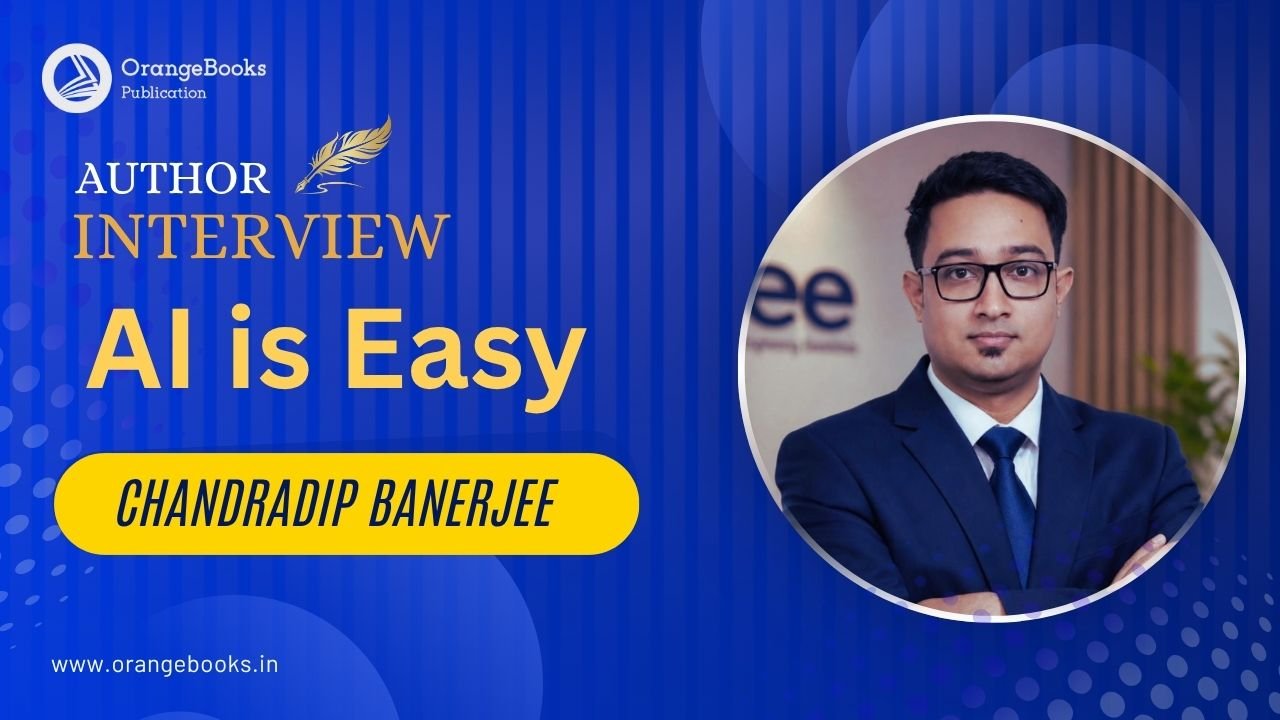
Chandradip Banerjee is an AI Architect and Data Science Project Manager with nearly 11 years of experience at Cognizant, Deloitte, and Accenture. He specializes in Generative AI, agentic systems, RAG workflows , Evaluations. His enterprise portfolio includes building advanced RAG chatbots, sentiment analysis engines, and scalable automation solutions.
As a technical author on Medium (@chandradip93), Chandradip breaks down agentic AI architectures alongside foundational data science topics like Statistical Concepts , ML Algorithms etc.
His academic background includes schooling at Purulia Zilla School, a Bachelor of Computer Applications (BCA) at Meghnad Saha Institute of Technology (Techno India Group), a Post Graduate Diploma in IT Management (PGDITM) from Symbiosis Centre for Distance Learning (SCDL), and a specialised AI Architect Program. Combining deep technical execution with enterprise consulting, Chandradip bridges the gap between complex AI research and scalable production systems.
Exclusive interview with the author
Q: What Inspired You To Write This Book?
A: Many people believe AI is tough or overly complex, but it is neither. It all comes down to our approach. Having been on this learning journey since 2017, I have realized that survival of the fittest is about adapting to change. I wrote this book to demystify AI and break down its core thought process into simple language that anyone, even a complete beginner, can easily grasp.
Q: Can You Tell Us About The Book?
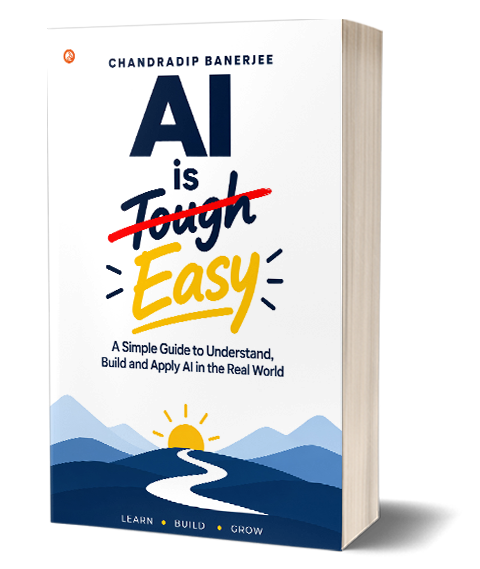
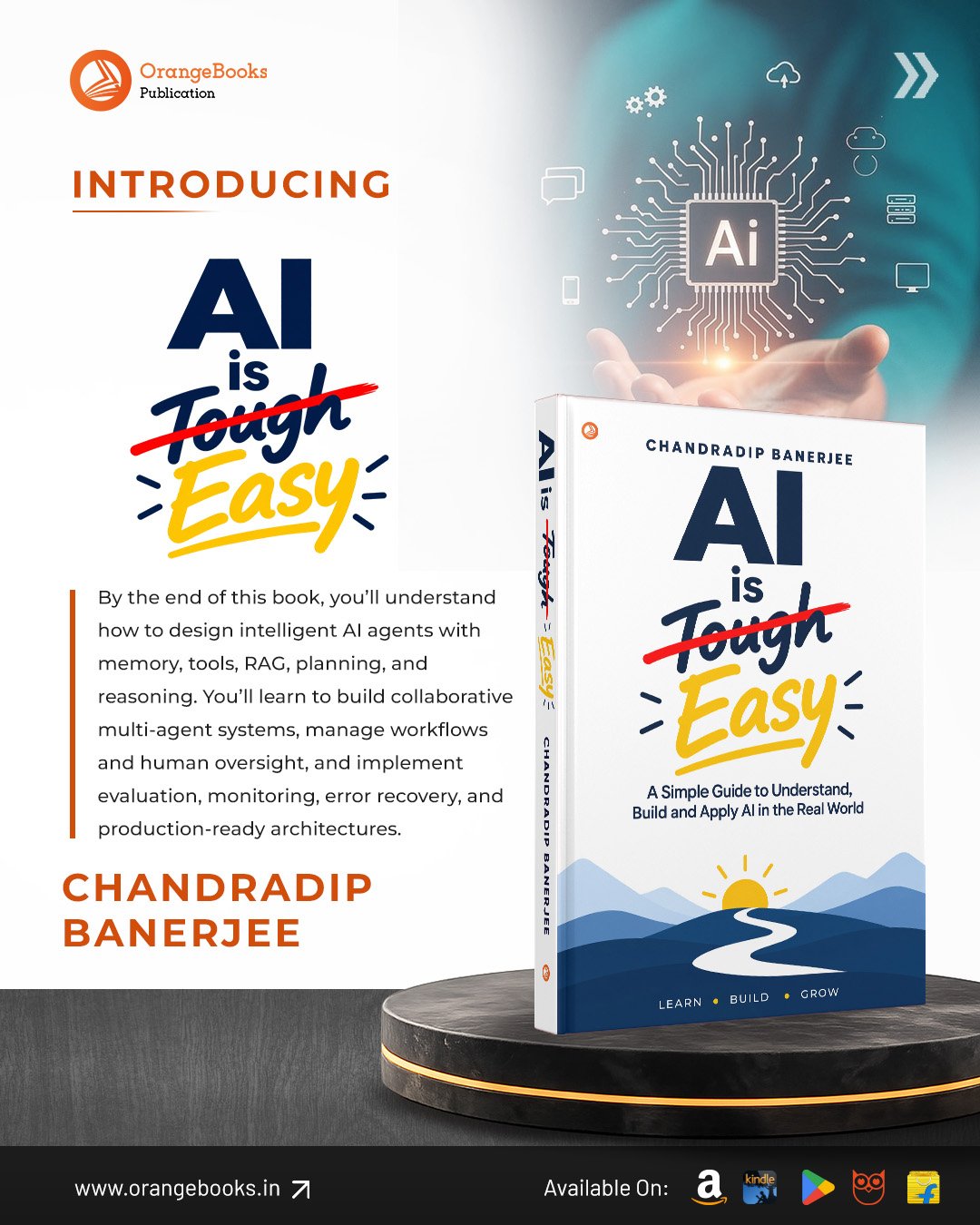
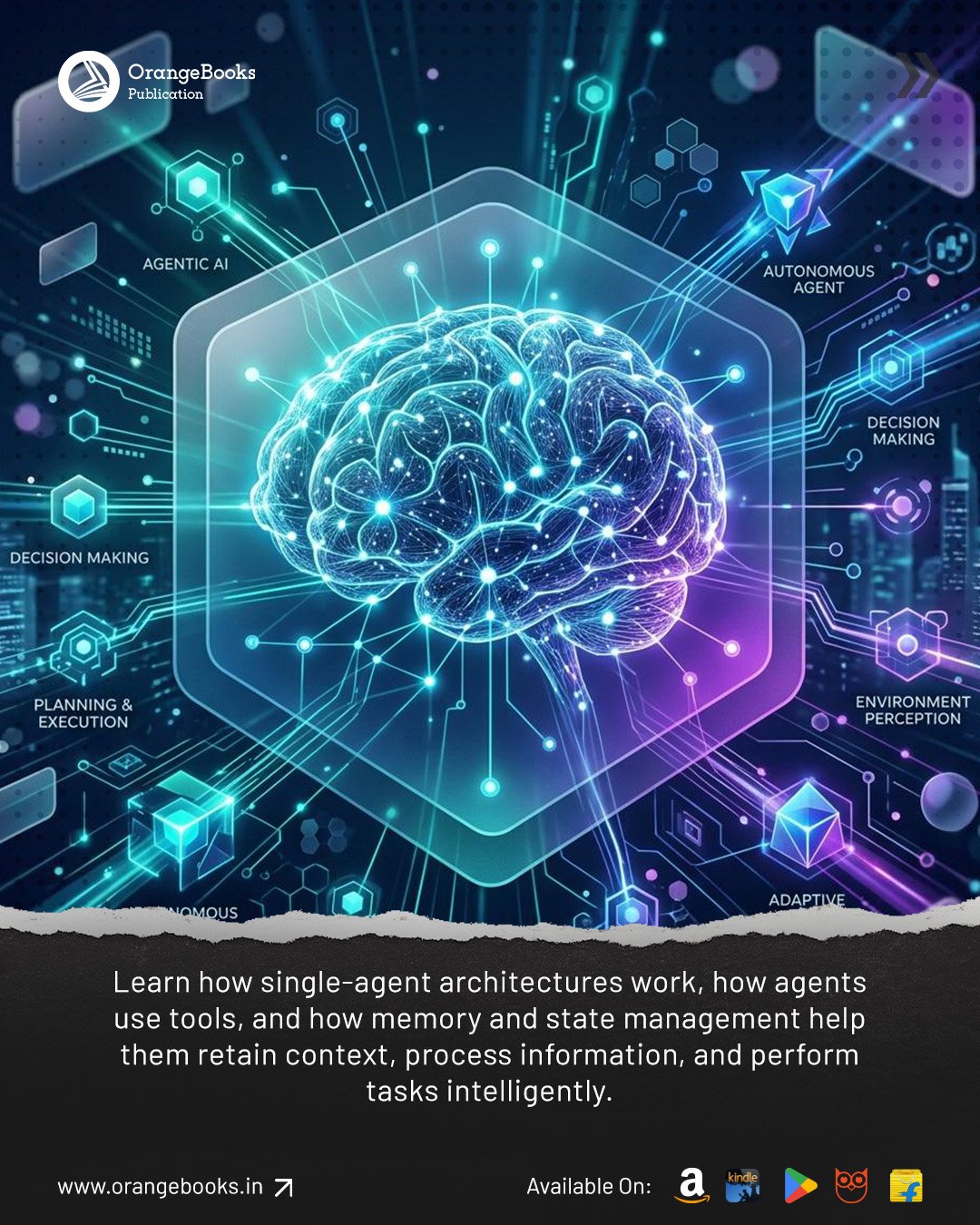
A: AI is Tough EASY is designed to demystify artificial intelligence by breaking down complex concepts into simple, intuitive ideas that anyone can grasp. Core Philosophy * Approach Over Complexity: The book challenges the common belief that AI is too difficult to learn. It demonstrates that the main hurdle is the perspective and teaching approach, not the technology itself. * Adaptation and Growth: Centered on the principle of continuous learning, it emphasizes that staying relevant requires understanding how AI thinks, evaluates options, and processes information. Target Audience * Complete beginners seeking a zero-jargon foundation. * Working professionals looking to build AI literacy without needing a heavy programming background. * Students and curious minds who want to understand the logic behind intelligent systems. Key Pillars * Deconstructing AI Mechanics: Translating complex frameworks into plain, everyday mental models. * Understanding the AI Thought Process: Walking through how AI systems interpret input data, learn patterns, and produce outcomes. * Practical Tech Literacy: Equipping readers with the confidence to adapt to changing technology and apply AI concepts effectively. By shifting the narrative from intimidating theory to practical clarity, the book acts as an accessible roadmap to understanding AI concepts with ease.
Q: What Does The Title Mean?
A: The title AI is Tough EASY uses a deliberate contrast to convey how our perspective transforms a subject: * Perception vs. Reality: AI feels intimidating and tough when wrapped in dense jargon and complex formulas, but with the right approach and logical breakdown, it becomes remarkably easy. * The Learning Curve: Placing two opposite words side by side captures the exact transition a beginner goes through: moving from initial fear and confusion to total clarity. * Reframing the Narrative: It directly challenges the myth that AI belongs only to mathematicians or software engineers, proving that what looks like a steep hill is actually a simple path once you change your mindset.
Q: What did you learn while writing the book?
A: Writing a book to make AI accessible brings several powerful insights about teaching, learning, and the technology itself: True simplicity demands deeper clarity Stripping away heavy jargon and complex formulas forces a complete command of the underlying mechanics. If a concept cannot be explained using everyday analogies, it usually means the breakdown is not simple enough yet. Fear of AI comes from presentation, not ability Most people are not intimidated by what AI does; they are intimidated by how it is presented. When the focus shifts from daunting technical terms to logical thought processes, the barrier to entry vanishes. Empathy is the best teaching tool Reflecting on the early stages of learning back in 2017 highlights how overwhelming the field can feel at first. Designing content from a beginner’s perspective bridges the gap between expert knowledge and real world understanding. Core logic outlasts changing tools Framing AI as a mindset rather than a static tool set ensures the lessons stay relevant as technology evolves. Teaching how to approach and reason alongside AI matters far more than memorizing specific software details. Teaching reinforces learning Structuring ideas for a broad audience sharpens personal understanding, proving that simplifying a subject is the ultimate test of mastery.


Q: Was any character inspired by a real person?
A: In a book created to make AI accessible, any learner personas, dialogue characters, or illustrative scenarios are usually deeply rooted in real-life encounters: Real mentees and students: The beginner characters and their doubts often mirror actual junior colleagues, students, or team members who asked intuitive questions during mentoring sessions. Non-technical family and friends: Everyday interactions with non-tech friends or family members serve as the exact blueprint for characters who need clear, jargon-free explanations. Your earlier self: The most authentic inspiration comes from reflecting on your own starting point in 2017, capturing the exact confusion, curiosity, and mindset you experienced when first tackling these concepts. Whether framed as narrative personas or practical scenario guides, grounding them in real-world people ensures the reader feels understood rather than lectured to.
Q: Where do you get your information or ideas for your books?
A: Statistics books , some Agentic AI books and YouTube and LLMs.
This book is published by OrangeBooks Publication. All rights are reserved with the author & the publisher.