- June 24, 2026
‘Witch Hat Atelier’ series review: Kamome Shirahama’s spellbinding sketchbook fantasia is one of the year’s finest strokes
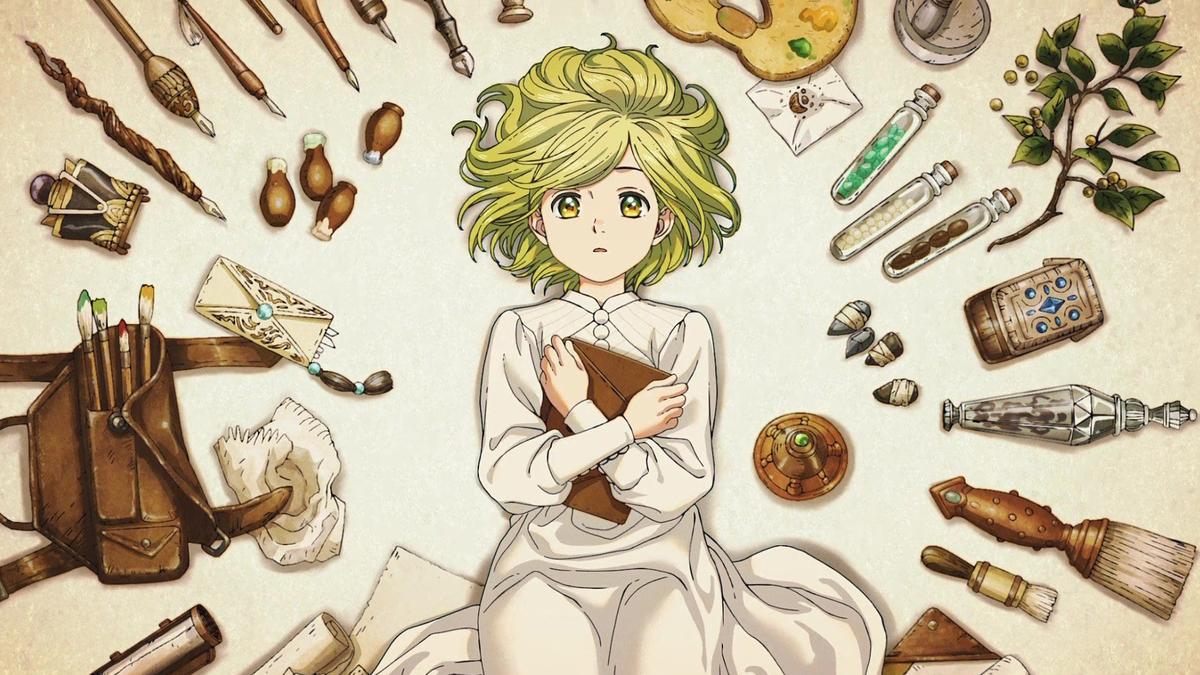
Something curious has happened to fantasy over the past few years. Having saturated itself with ever more elaborate chosen ones or the plethora of other inherited shortcuts to significance, the genre has now begun rediscovering the far older Tolkienian wonders of routine life and joys of discovery. The resurgence found its most influential modern expression when Frieren: Beyond Journey’s End reoriented the genre in 2024, before Delicious in Dungeon further expanded the conversation shortly after. After years of anticipation, Kamome Shirahama’s Witch Hat Atelier — one of the most acclaimed manga of the past decade — finally joins that company with Bug Films’ long-awaited adaptation.
The story follows Coco, the daughter of a dressmaker living in a rural corner of the Zozah Peninsula, a fantasy continent where magic is believed to be an innate gift possessed only by a small class of witches sanctioned by the institution known as the Great Hall of Witches. Coco grows up internalising the idea that some people are born special, and everybody else just doesn’t have what it takes.
After secretly observing a travelling witch Qifrey repair a broken carriage, Coco realises that every spell is produced through the drawing of precise runes using specialised ink, and the revelation prompts her to recreate symbols from a mysterious book gifted to her years earlier by a masked stranger. Unaware that the volume contains forbidden magic and lacking any understanding of the system she has stumbled into, she activates a spell that encases her family home in crystal and leaves her mother trapped inside it. Recognising both the danger of what Coco has learned and her connection to forces he has been investigating himself, Qifrey takes her into his atelier as an apprentice.
Witch Hat Atelier (Japanese)
Director: Ayumu Watanabe
Cast: Rena Motomura, Natsuki Hanae, Hibiku Yamamura, Kurumi Haruki, Hika Tsukishiro, Yuichi Nakamura
Episodes: 12
Runtime: 25 minutes
Storyline: A girl becomes an apprentice at an atelier to fulfill her longtime dream of becoming a witch and restore her mother whom she accidentally turned into stone
The first and most obvious reason Witch Hat Atelier commands such devotion is its artwork, which possesses a visual identity so singular that any adaptation was always going to live or die by its ability to reproduce it.
Shirahama’s manga earned much of its reputation through artwork that synthesises several distinct visual traditions into a style that feels immediately recognisable as her own. The decorative linework, floral ornamentation and flowing silhouettes draw heavily from Art Nouveau illustrators such as Alphonse Mucha, while the dense architectural detail and storybook framing recall the illustrated fantasy volumes of artists like Arthur Rackham and Edmund Dulac. Running beneath that is even the influence of shōjo manga pioneer Moto Hagio, whose elaborate page composition and romantic European settings helped define the visual grammar of modern fantasy manga.

A panel from Kamome Shirahama’s original ‘Witch Hat Atelier’ manga
| Photo Credit:
Kodansha
Shirahama’s background as an illustrator for Marvel, DC and Star Wars projects also surfaces in the comic-book clarity of her figure work, while her stated admiration for Tolkien and twentieth-century Western fantasy publishing can be felt in the series’ sweeping landscapes and layered worldbuilding.
To translate that dense visual language into animation, Bug Films needed to create movement that felt authored by the same hand that designed the world. Director Ayumu Watanabe, whose previous work includes Children of the Sea, seemed to fully grasp that recreating Shirahama’s art style needed masterful visual precision. And so, the adaptation spent years in production following its 2022 announcement and eventual delay from its original release window (which is easy to justify within minutes of watching the premiere).

What Bug Films achieves ranks among the most visually accomplished television anime produced in recent years because every creative department appears to be pursuing the same aesthetic philosophy. Coco’s earliest encounters with magic focus on gentle pen and ink craftsmanship rather than explosive displays of power, before the production begins flexing its considerable range through Qifrey’s breathtaking aerial confrontation with a dragon, the unnerving dreamscapes that transform Coco’s guilt and anxiety into surreal storybook horror, or the season finale’s startling shift into harsher, expressionistic manga linework during Euini’s transformation; the adaptation consistently moulds its style according to the emotional and thematic demands of each sequence.

A still from ‘Witch Hat Atelier’
| Photo Credit:
Netflix, Kodansha
Meanwhile, sound designer Kisuke Koizumi renders spellcasting almost like a Foley-driven artisan documentary, even detailing scratches across parchment and changes in pen pressure. And Yuka Kitamura’s elegant score avoids overwhelming scenes with emotional instruction because the imagery already performs much of that labour.
Beneath the ornate illustrations and impossibly intricate power system, the story’s core question is simple: what happens when an entire society is organised around a lie designed to restrict knowledge? The brilliance of Witch Hat Atelier comes from how thoroughly it commits to the consequences of that premise.

The tendency for fantasy stories to default to elaborate aristocracies disguised as power systems cannot be overstated, whether it is the hereditary magical lineages of Harry Potter, the noble bloodlines and divine destinies that govern everything from Game of Thrones to Dune, or the numerical power scaling of countless isekai series where status effectively becomes a measurable caste system. Even excellent contemporary fantasy works like Frieren frequently position power as something fundamentally inaccessible to ordinary people.
Shirahama’s story moves in the opposite direction because magic here feels closer to literacy. The conflict between those who know and those who don’t feels strikingly contemporary because it reframes witchcraft as restricted knowledge, turning the series into an allegory for educational access, intellectual property, gatekeeping and the monopolisation of information by systems invested in maintaining existing hierarchies.
Likewise, Witch Hat Atelier serves up an extended meditation on artistic labour. Shirahama herself developed the series from an observation that the very act of creation is nothing less than performing magic, and the adaptation preserves that metaphor. Coco’s novitiate education frequently resembles art school. She practices fundamentals, repeats exercises, makes mistakes and discovers that enthusiasm alone cannot substitute for disciplined craft. Every breakthrough comes through hard work, and every failure by misunderstanding process.

A still from ‘Witch Hat Atelier’
| Photo Credit:
Netflix, Kodansha
This framework also gives depth to the supporting cast at the atelier. Qifrey is the gifted shonen mentor à la Kakashi or Gojo, yet the comparison gradually breaks down as the series exposes barely concealed obsessions that inform his investment in Coco’s future. The atelier’s resident damage-control specialist, Olruggio, provides a welcome corrective to fantasy’s endless supply of emotionally unavailable adult men by masking genuine affection under his perpetual exasperation. Together, the two girl dads and the domestic life they build alongside Coco, Agott, Tetia and Richeh make for a tender portrait of a found family.
The Qiflings receive similar treatment. Agott begins the series fiercely protective of hierarchy and achievement, carrying herself like somebody who has spent years treating excellence as a prerequisite for affection, which elevates her hostility toward Coco beyond simple jealousy. Tetia approaches magic from the opposite direction, treating every lesson, creature and stranger as an opportunity for connection. Richeh occupies a different position altogether, worrying that excessive adherence to established methods risks reducing creativity to replication. Their disagreements, insecurities and eventual friendships consistently return to the same underlying questions concerning how people define themselves and whether education should cultivate individuality or merely reproduce existing systems.

A still from ‘Witch Hat Atelier’
| Photo Credit:
Netflix, Kodansha
Those questions become even richer once the anime introduces Tartah, the young witch whose Silverwash condition prevents him from perceiving colour in the way the magical world expects. Fantasy fiction has often struggled to engage with disability outside a framework of exceptionalism, whether through characters such as Bran Stark in Game of Thrones, whose physical impairment becomes entwined with destiny, or Toph in Avatar: The Last Airbender, whose blindness is offset by extraordinary abilities that effectively grant her alternative forms of perception. Witch Hat Atelier roots Tartah’s experiences in the practical realities of its worldbuilding instead. Because the practice of magic and its methods of instruction rely heavily on colour differentiation, he struggles with the design of the system itself rather than any inherent personal deficiency. The series consequently shifts the conversation away from individual limitation and toward institutional responsibility, asking whether a society genuinely committed to nurturing talent can continue to organise itself around assumptions that exclude entire groups of people from full participation.

Though perhaps the clearest expression of the series’ political intelligence comes from the ideological conflict between its warring magical factions. The Pointed Hats defend restrictions on magical knowledge as a necessary response to historical catastrophe, while the Brimmed Hats regard those same restrictions as an unjust monopoly maintained by an entrenched, exclusionary ruling class. The writing cleverly refuses to fully endorse either position because both stem from legitimate historical grievances and both possess the capacity for abuse.

A still from ‘Witch Hat Atelier’
| Photo Credit:
Netflix, Kodansha
Yet Witch Hat Atelier would not work nearly as well if it were merely a pointed critique of gatekeeping. Its most remarkable achievement is the ease with which it sustains a sense of wonder while subjecting the institutions surrounding magic to sustained scrutiny. Coco’s discovery of magic is genuinely awe-inspiring because Shirahama seems to truly delight in the enchanted shoes that allow their wearer to run across the sky, or the pretty Glowstone pathways that can transform an entire city into a luminous work of public art, or any of the other endless assortment of clever contraptions that present magic as a tool capable of reshaping everyday life in ways that feel imaginative, useful and just plain miraculous.

The internet has honestly become the great uncredited influence on modern fiction — creators seem ever more inclined to literalising some of its most defining sensations, whether that is Kane Parsons transmuting endless online exploration as a sprawling nightmare in the Backrooms, Vince Gilligan’s Pluribus imagining the endpoint of networked existence through an all-consuming hive mind, or Shirahama’s more emancipatory open-source promise of knowledge as something collaborative, iterative, liberatory and fundamentally meant to be shared. That she embeds this conviction within one of the most enchanting fantasy worlds of the decade is a remarkably persuasive spell.
Witch Hat Atelier is currently streaming on Netflix